The Siberian husky and the Alaskan
malamute are commonly confused. Both dogs are somewhat similar in
appearance (they can have the same color patterns), they are spitz
breeds; and both have a somewhat similar personality; they love to
run/ But is always good to know how to tell Huskies and Malamutes apart, or know
what traits either is more likely to have especially if you are
considering getting either dog as a pet.
Please note that there are many
different breeds of husky, in general we will refer to the Siberian
Husky.
So how do you tell the difference
between a malamute and a husky?
Alaskan Malamute
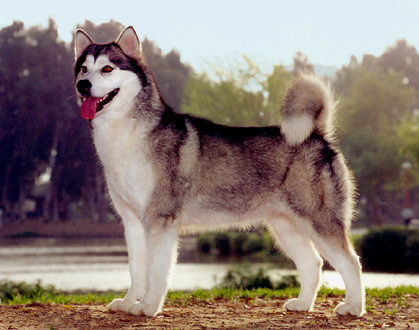
- Malamutes are quite a bit larger than huskies with some males weighing in at 90 pounds (41 kg).
- Have a wider head and ears are set further apart.
- Malamutes have brown eyes.
- Tend to carry their tails over their backs.
- Malamutes are noted for digging out of yards to escape the boredom of confinement.
- The average lifespan is 12 years.
Siberian Husky


- Huskies are considered medium sized dogs, with males weighing around 60 pounds (27 kg).
- The shape of a huskies head is narrower and the ears are set closer together.
- Huskies can have brown eyes, blue eyes, or one eye of each color.
- Tend to have a more relaxed way of carrying their tail, although they sometimes carry it high they will often hang their tail down.
- Huskies are noted for jumping fences and will often climb a fence to get out of a yard.
- The average lifespan of a husky is 14 years.
Both huskies and malamutes are high
energy dogs who need a lot of exercise. They are considered to be
“northern breeds” and enjoy colder weather and in warm weather
care should be taken to keep the dogs cool.
Huskies and malamute have strong prey drives and have been known to kill cats, chickens, rabbits, and so forth. If you have other pets and are thinking of getting a Husky or Malamute, make sure to get one from a breeder that has other pets and has socialized the puppy well.
Both are noted for being escape artists who then run, and run, and run. They are more independent than most dog breeds.
Huskies and malamute have strong prey drives and have been known to kill cats, chickens, rabbits, and so forth. If you have other pets and are thinking of getting a Husky or Malamute, make sure to get one from a breeder that has other pets and has socialized the puppy well.
Both are noted for being escape artists who then run, and run, and run. They are more independent than most dog breeds.
Huskies and malamutes were both bred to
pull sleds. Huskies were often used in larger teams with more dogs, and are often used in sled races,
while malamutes were used in smaller teams of fewer dogs, and were
used to pull heavier at slower speeds.
Both the husky and the malamute dog
can travel 35 miles a day and as such they need an owner that can
provide them with lots of physical exercise.
Neither breed is particularly suited
for being a guard dog, but both tend to love people in general.
Malamutes and huskies rarely bark but
both will howl. They sometimes learn to bark if around other dogs
that bark.
Both the Malamute and the Husky are independent breeds,
as noted they will often run with no interest in turning around.
They can be trained but are not necessarily obedient.

The largest selection of nutrient rich foods are available at PetFoodDirect.com! Up To 25% OFF
The largest selection of nutrient rich foods are available at PetFoodDirect.com! Up To 25% OFF


