Showing posts with label how to. Show all posts

Monday, March 4, 2013

My Cat with an Open Wound on His Neck

I wanted to share something a little different with you today.  I just want to tell you about what happened recently to my cat Rilke.  Rilke was a cat we rescued a few years ago.  He had been born wild but now is a rather spoiled cat, one of five we currently have here on our little hobby farm.

Rilke on his favorite cat tower long before this happened.

One day Rilke was not acting himself, he seemed a bit more tired but we really did not pay too much attention as cats do sleep a lot (especially in the winter when they find a nice sunny spot on the floor).

The next day he wanted to go outside, but did not come in that night.  Again this is not unusual as the weather was warm and we have lots of buildings for a cat to explore and sleep in if they want to.  The following day was a Sunday and he came running in the house and disappeared just as I was going out to check the sheep. 

It was not until Sunday afternoon that I saw him again, and noted he had a large swollen lump under his jaw.  I examined it a few times before deciding to go to the veterinarian.

My veterinarian, Dr. Davis, kept the cat for a few days, putting him on antibiotics and draining some of the swelling down.  Dr. Davis was not sure if there had been a tooth problem or what, and was concerned that the cat might need surgery.

The wound broke and a large flap of dead skin was removed, leaving a huge open wound.  There was no skin loose enough to stitch the sides of the wound together, as such it was left open.

By Friday it was determined Rilke did not need surgery and could go home.  I was given medication to give him orally (he did not like that even though it was suppose to be yummy tasting) and medication to spray on the wound 3 to 4 times a day in addition to washing it gently once or twice a day.

The spray was Vetericyn VF Wound and Skin Care.  Of course Rilke did not care for getting sprayed but then again, he was not too happy about being forced to live strictly indoors only while is wound heals.

Here are is a photo I took a few days after we got the little guy home.


As you can see, he is a very fluffy cat with lots of fur.  In addition to washing the area I also had to cut more fur off as it kept getting stuck into his wound as he loves to roll on his cat tower.

That was two weeks ago and he is healing, I will try to get another picture of him after this is all over.

If anyone is interested I will say that Vetericyn is a very good product, there are several different formulas.  They help keep the wound clean and aid healing, so far I would certainly recommend this product to anyone who has a wounded pet.  Talk to your vet, or order it online.

Click here to buy Vetericyn Wound & Infection Pump Spray Vetericyn Wound Pump Spray 8Oz

Vetericyn Wound & Infection Pump Spray Vetericyn Wound Pump Spray 8Oz Vetericyn Wound & Infection Pump Spray Vetericyn Wound Pump Spray 8Oz
VETERICYN WOUND PUMP SPRAY 4OZ   VETERICYN WOUND PUMP SPRAY 8OZ  


Remember if your pet has a serious health problem please talk to a veterinarian before treating it on your own.

Also do note that cats cannot tolerate some of the medications used on humans so make sure you use medications only for cats.

Saturday, March 2, 2013

How to Stop a Cat from Killing Birds

Cats are predators; they like to kill things. Cats naturally kill mice and birds. Nobody seems to mind to much when a cat kills a mouse, in fact cats are often kept as mousers, but people tend to be very upset when cats kill birds.

There are several ways a cat owner can prevent their cat from killing birds.

Preventing Outdoor Cats from Killing Songbirds

Cats that go outside are a major threat to songbirds. While some cats do not bother birds, and others are quite inept at catching them, a clever, and patient, cat can kill a bird every day that it is outside. There are several things you, as a cat owner, can do to reduce the risks of your cat catching and killing birds.

Provide your cat with a collar and bell. A clever cat will learn how to move without ringing the bell but at least it is better than nothing. Birds are good at seeing colors so try to buy a collar that is easy to see on your cat.

Safe Cat Breakaway Collar Zebra

Click here to see Safe Cat Breakaway Collars


Do not encourage birds in your yard, do not have a bird bath or feeder that would attract them.

Build your cat an outdoor cat enclosure so when your cat is outside it is enclosed. Not only will this make it harder for your cat to catch birds, but also keeps your cat safely within your yard.

Let your cat out on a harness. Cats must be trained first for this and ideally not left tied outside without supervision.

Keep the cat indoors, or at least indoors more often.


Training Your Cat Not to Kill Pet Birds

If you have a cat and have pet birds you may be concerned about your cat going after them and killing them.
Small and flighty birds are the ones that a cat is most likely to attack. Larger birds, and those that are not as nervous, will not behave like prey and as such the cat is less likely to go after them. Large birds such as parrots can bite back if threatened.

Cats can be discouraged from attacking pet birds through consistent training. When a cat shows any interest in the bird the cat should be given a quick squirt with a water bottle. Never squirt the cat after it leaves the area as this is just tormenting the cat and it will not understand the relationship to the bird.  Until the cat is fully trained and shows no interest in your pet bird they should not be allowed together. 

Offer the cat treat rewards when in the room with the bird and is ignoring it.

Your pet bird must have a safe, and secure bird cage (one that will not tip over), just in case!

A and E Dometop Bird Cage with Shelf Black

Click to see A and E Dometop Bird Cages

If you do not already have a cat, but do have a bird and are considering getting a cat, you may want to select a kitten.  Kittens are easier to train rather than a mature cat that perhaps has already enjoyed chasing birds. Or you might try to adopt a cat that has already lived with birds and is good with them.


Notes

Please note declawing does not prevent a cat from killing birds; cats kill with their teeth. Remember that cats are natural predators, to punish a cat for being a cat is unfair, a good owner would find other ways to prevent their cat from killing birds.

Other Reading


How to Build a Cat Enclosure

Article has been republished on Full of Knowledge

Sunday, February 17, 2013

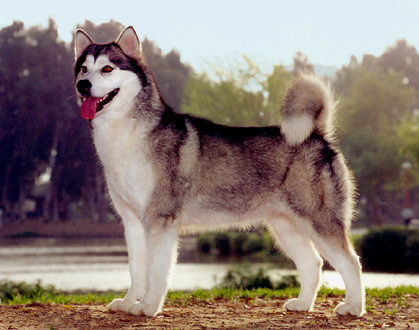
How to Tell a Husky and a Malamute Apart

The Siberian husky and the Alaskan malamute are commonly confused. Both dogs are somewhat similar in appearance (they can have the same color patterns), they are spitz breeds; and both have a somewhat similar personality; they love to run/  But is always good to know how to tell Huskies and Malamutes apart, or know what traits either is more likely to have especially if you are considering getting either dog as a pet.

Please note that there are many different breeds of husky, in general we will refer to the Siberian Husky.

So how do you tell the difference between a malamute and a husky?

Alaskan Malamute

  • Malamutes are quite a bit larger than huskies with some males weighing in at 90 pounds (41 kg).
  • Have a wider head and ears are set further apart.
  • Malamutes have brown eyes.
  • Tend to carry their tails over their backs.
  • Malamutes are noted for digging out of yards to escape the boredom of confinement.
  • The average lifespan is 12 years.

Siberian Husky
 

  • Huskies are considered medium sized dogs, with males weighing around 60 pounds (27 kg).
  • The shape of a huskies head is narrower and the ears are set closer together.
  • Huskies can have brown eyes, blue eyes, or one eye of each color.
  • Tend to have a more relaxed way of carrying their tail, although they sometimes carry it high they will often hang their tail down.
  • Huskies are noted for jumping fences and will often climb a fence to get out of a yard.
  • The average lifespan of a husky is 14 years.

Both huskies and malamutes are high energy dogs who need a lot of exercise. They are considered to be “northern breeds” and enjoy colder weather and in warm weather care should be taken to keep the dogs cool.

Huskies and malamute have strong prey drives and have been known to kill cats, chickens, rabbits, and so forth. If you have other pets and are thinking of getting a Husky or Malamute, make sure to get one from a breeder that has other pets and has socialized the puppy well. 

Both are noted for being escape artists who then run, and run, and run. They are more independent than most dog breeds.

Huskies and malamutes were both bred to pull sleds. Huskies were often used in larger teams with more dogs, and are often used in sled races, while malamutes were used in smaller teams of fewer dogs, and were used to pull heavier at slower speeds.

Both the husky and the malamute dog can travel 35 miles a day and as such they need an owner that can provide them with lots of physical exercise.

Neither breed is particularly suited for being a guard dog, but both tend to love people in general.

Malamutes and huskies rarely bark but both will howl. They sometimes learn to bark if around other dogs that bark.

Both the Malamute and the Husky are independent breeds, as noted they will often run with no interest in turning around. They can be trained but are not necessarily obedient.


Nutrition 468x60
The largest selection of nutrient rich foods are available at PetFoodDirect.com! Up To 25% OFF

Training Guide for a Husky
Pet Wolf

This article has been republished at Full of Knowledge.

Sunday, January 13, 2013

Feliway Helps Stop Behavioral Urination Problems in Cats

There are many reasons why cats do not use their litter box. Some of the common cases are:
  • Urinary tract infection
  • Type of litter the cat does not like
  • Dirty litter box
  • Cat not neutered
  • Too many cats, not enough litterboxes
  • Bad choice of placement for the litterbox
  • Declawing
  • and so forth.

One of the other reasons why a cat might not use its litter box for urine is behavioral. Cats, as laid back as they look, are actually fairly high strung, and sensitive. They often suffer from anxiety issues and stress. 

Cats can be stressed by many things; a new baby, new house, chaos in the home, or even other cats hanging around.

Feliway is a product made for cats with stress related concerns, or those who spray to mark territory. It has been proven to help reduce urination around them home as when brought about by stress or normal marking behavior sometimes seen in cats that are fixed (not other problems) and has also been shown to reduce clawing and scratching. 


How Does Feliway Work?


Feliway mimics a cat's pheromones (scent hormones) to calm them. When a cat is calm it does not feel as much of a need to mark its territory with urine (yes female cats do this too, even neutered males). It is a spray that is applied after cleaning any urine soaked areas.

Humans cannot smell Feliway but cats can. Feliway encourages a cat to rub its face on the areas that have been sprayed, in this way the cat puts its scent in areas so will not feel the need to spray those areas. It is important that owners do not wipe clean the area after the cat has wiped its face there.

Typically after a month's use, Feliway has shown a 95% success rate. It should be sprayed once or twice daily to problem areas. Feliway is never sprayed directly on the cat.

To calm a cat before a trip, spray the carrier the night before you take the cat in it. Leave the carrier open so the cat can go in. Give another spray just prior to putting your cat in the carrier. In an emergency situation where you cannot spray the carrier the night before, one spray just before putting the cat in is still effective to help calm the kitty. 

Feliway Spray 75 ml Feliway Spray 75 ml
Feliway spray is an effective medication to prevent urine marking and scratching and also control stress related behavior in cats. This pet care product prevents cats from urinating where they shouldn't by duplicating the smell of a cat's natural scent glands. Feliway mimics the feline facial pheromone, which have a general calming effect which helps neutralize the urge to urine mark.

Sunday, January 6, 2013

Natural Remedy for Dogs who Eat their Own Feces

Coprophagia is the name given for when a dog that eats its own feces. This is a disgusting habit in the eyes of many pet owners, but perfectly natural among dogs. Some breeds, such as the Dachshund, seem more prone to engage in eating their own stools.

On Sale at Only Natural Pet Store

A long standing myth has been that dogs eat their stools because their food is low quality. We now know this is not true, dogs eating poor quality food are not going to get any additional vitamins or nutrients in their stool. However there has been a link made between dogs with vitamin B deficiencies and coprophagia.

A dog fed a good quality food is likely to engage in coprophagia simply because there can be some undigested bits in their poop, and quite honestly, their poop might even smell yummy!

A dog with worms might be getting fed enough but the worms are eating their share of the dog's food and making digestion difficult, as such the dog may still feel hungry and eat its feces as a result.

Mother dogs eat the stools of their pups as a way to keep the den area clean. In the wild dogs might also eat their own feces around their den as a way to keep the area clean. In puppy mill situations a bored dog might even eat its own stools as something to do, or as a way to fill its empty stomach if underfed.

Owners who leave their dog out in a dirty backyard with very little mental stimulation, may find that their dog picks up coprophagia as a habit.

How to Stop a Dog from Eating its Stools


The first thing an owner can try to do is to be more proactive in regards to cleaning up after their dog. As coprophagia sometimes starts when the dog is a puppy, while house training an owner can pick up after the pup immediately and give the pup a small treat reward so that it never even thinks about turning around to eat its poop.

Some people have found that adding canned pineapple or meat tenderizer to the dog's food can help as they may make the dog's stool taste bad after the fact. This is a home remedy that works for some dogs, but not others. Dogs that have been eating their own stool for some time will have

There are also products available in stores and online that can help with this nasty behavior. Not all of these products are any good, and some use questionable ingredients, so always look for an “All-Natural” product when dealing with any sort of concern like this.

Save 5% on your first order at Only Natural Pet Store! Coupon code CJ15.


Only Natural Pet Store has a terrific product, Only Natural Pet Stool Eating Deterrent


screen shot from only natural pet

The Only Natural Pet Stool Eating Deterrent product is a pill that contains:
  • digestive enzymes (to help improve digestion so fewer yummy bits are left in the stool), 
  • cayenne pepper (to make the stool taste bad), 
  • vitamin B (to combat any deficiencies), 
  • yucca (to reduce the smell of the stool),  
  • and a few other natural ingredients. 

This product is made in the USA, and contains human grade ingredients. One bottle contains 90 pills.

Click here to learn more about this great product or to get it.

Concerned pet owners will always look for all natural solutions to any pet problem they have, noting that second to accidents, cancer is a leading killer of pets.


Read other articles on products from Only Natural Pet

What are Holistic Pet Products
Natural Ways to Control Fleas and Ticks
Vegetarian Dog Foods


Monday, December 31, 2012

Pet Safety in the Dark

Pet safety in the dark is always something people should consider. One of the leading causes of pet death is accidents and many accidents happen at night when cars hit pets. Pet owners sometimes assume that drivers will see their pet, but pets are fast moving and being short, they are usually below where most drivers focus their eyes.

Never assume that because your pet has never been hit by a car that it won't be hit in the future. At night a LED product can save your pet's life.

If you ride a bike and walk your dog at the same time having a LED light on your pet can help drivers take notice of the animal. A LED light on your bike is a good idea as well.

People who ride their horses in the evening may find clipping a small LED light (such as the LED collar light) on the bridle adds extra safety – as sometimes it can get darker faster than you might expect. Another safety tip when riding near roads is to ride in the direction of the oncoming traffic.

Rural people, or those who do not have fenced yards, may find that a light on their dog is a great way to see where it is when they let it out in the evening.

Nite Ize is an online supplier of LED safety lighting and other similar products (including light up pet toys), but in particular their products for pet safety are excellent.

pet

Pick from:
  • LED Collar
  • LED Collar cover (turns a regular collar into a light up collar)
  • LED Collar Light (red or white)
  • LED Leash
  • LED Flying disc (toy)
  • LED Ball (toy)
Click here to see their Pet Collection

Free Shipping on orders over $45 with code FSCJ213 valid through 2/28/13


Nite Ize also sells batteries for their LED pet safety products. Nite Ize is located in the United States and most products are available to be shipped internationally. They have a 30 day return policy on all unopened products.

Saturday, December 22, 2012

Do Bearded Dragons Make Good Pets?

In recent years Bearded Dragons have become popular pets. I have never owned one myself but have met my share of happy owners, disappointed owners, and people who had their pet die within a few weeks of getting it.  This is often because they did not understand how to care for their pet correctly.  Others owners were not prepared for the size that their beardie grew.

How Big Do Bearded Dragons Get?

Bearded dragons originated in Australia. They typically measure about 4-6 inches (10-15 cm) when first purchased, but owners must be prepared for their Beardie to grow to 20 – 24 inches (50 – 60 cm), with females being slightly smaller. In most cases this means the vivarium (reptile enclosure) for a small bearded dragon will not be big enough for when they are mature.

What Kind of Enclosure  is Needed for a Pet Bearded Dragon?

A young bearded dragon may be kept in a 20 gallon enclosure, while a mature one will need at least a 40 gallon enclosure. The tank selected should be one that is made for lizards and is therefore long rather than tall, allowing for more floor space.

Young bearded dragons can be kept in groups but as they mature bearded dragons should be kept individually. It is possible to keep a male and female together, or two females, if the enclosure is large enough, but two males will fight.

Bearded Dragons are desert lizards their vivarium needs to be created to resemble a desert habitat. When young its best just to use newspaper to line their enclosure with, but later they can have 4 inches (10 cm) deep of calcium sand. They should have rocks, and in particular a raised “basking rock” on which to warm themselves for digestion, you can even buy electric heated rocks. They also need a shaded area in which to cool down.

The tank will need to be cleaned weekly. The lid must be well ventilated with proper lighting (a heat lamp and UVA/UVB light).

Humidity should be maintained at 20% to 30% and there are special humidity gauges to help you monitor the conditions of the tank. The tank must be kept warm in the day, and slightly cooler at night.

They should have a food dish and water dish. Some bearded dragons are reluctant to drink from the water dish so should be misted in the morning (in the wild they get water by licking the dew off their head), or have water sprayed on their food.

photo source

What do Bearded Dragons Eat?

Bearded dragons are omnivores, they need a variety of food. When they are younger they need a balance of 75% insects to 25% plants, but as they mature this becomes more of a 50/50 thing. The insects can be live gut loaded crickets, meal worms, or wax worms. You can also buy dried crickets, or prepared foods and see if your beardie will eat them. The plant matter can be kale, collard greens, spinach, dandelion leaves (assuming no chemicals sprays were applied), shredded carrots, pears, and chopped up zucchini.


Additional Information on Keeping a Pet Bearded Dragon

Bearded dragons can be picked up and held but care should always be taken that they are not dropped. If not use to being held they may puff up but over time they can become “tame”. People need to wash their hands before and after handling their pet. Soap should not be used before handling the pet (just wash with water) but should be used afterwards. Bearded dragons are considered one of the more relaxed types of lizards as pets.

A bearded dragon can live for 10 to 12 years, so it is important for an owner to decide if they can provide a lifetime of care for their pet.

Note that as they get larger bearded dragons are not as “cute” as when they are small, and for some people (kids in particular) that can be an issue. Again it is very important to consider the mature size of a bearded dragon before getting too committed to getting one as a pet.

If you are serious about getting a bearded dragon as a pet you may want to get some supplies and set up your vivarium first.

Pet Warehouse has a Reptile section with proper lighting supplies, sands, accessories, grooming aids, medication, thermometers, food, and so forth.  Check to see their huge range of Reptile Supplies

Thursday, December 20, 2012

Your Pet Purchases can Help Feed Shelter Pets

PetFoodDirect is an online supplier of pet foods and supplies. They have a rewards program that allows their customers to help shelter pets.

Many pets end up in animal shelters for no fault of their own, sometimes a person got the wrong pet for their lifestyle, sometimes the owner had to move but could not take the pet with them. There are many reasons why cats and dogs are surrendered to animal shelters.

Most animal shelters are non-profit, they depend on donations from the public, government grants, and fund raising, to help provide food for their pets. As a pet lover you can donate to your local animal shelter at anytime. They always are happy to receive cash donations, and donations of pet food, however you might want to call first to see what they need. 

probably not what you think of when you think of feeding shelter pets!

Some of the things people often do not think about donating to an animal shelter, but that the shelters often need, are office supplies (paper, pens, etc.) and cleaning supplies (garbage bags, bleach, etc.). For pets, animal shelters often need blankets for the dogs, and toys. They can use old towels for their cats. 

Of course making a donation is not always possible but that does not mean you cannot help pets.
As a pet owner all you have to do is join PetFoodDirect's Rewards Program and you can help shelter pets as well as saving on money for your pet's food and products.

PetFood Direct sells great quality dog and cat foods such as Orijen and Wellness. They carry treats and flea and tick products, heartworm products (such as Heartgard) and even pet toys. They sell things for pet birds, wild birds, fish, reptiles and small caged pets. Their autoship program allows for further savings and convenience of not having to worry about running out of pet food.

What is the PFD Rewards Program?


With the PetFoodDirect Rewards Program every dollar you spend earns you reward points. You earn 15 points just for joining the program and if you sign up for autoship your points are doubled, plus you can get 300 points just for signing up. 

  • 150 points = Donates 2 meals to shelter pets
  • 400 points = Donates 6 meals to shelter pets
  • 600 points = Donates 10 meals to shelter pets
Or you can use your points on your own purchases, 1,000 points can be traded in for $10 off your next purchase, or 1,500 points can be used for 25% off.

Here are some links you can click to get you started on your way to help shelter pets just when buying things you already need for your own furry friends!


Signing up for PetFoodDirect's reward program is free and I encourage you to take advantage of it to help animal shelters to help their adoptable pets.
 

Friday, December 14, 2012

Information on Reeves Turtles as Pets


My daughter recently got a new pet, a Reeve's Turtle. In my area many turtle species are illegal to buy or sell (such as the red-eared slider) but Reeves are allowed. I was surprised to see turtles for sale that so tiny, her turtle was maybe 2 inches (5cm) at most.  In the USA this would not be legal as the trade of turtles whose shell is under 4 inches is illegal.  

I was quite worried about getting her, but my daughter is 18 so it was her decision.  


The Reeve's Turtle is also known as the Chinese pond turtle, they are found in China, Hong Kong, Korea, and Japan; they are considered to be an endangered species particularly in China. The biggest threat to them comes from being hunted for use in Chinese medicine, however they breed well in captivity.

Turtles are not good pets for first time pet owners, they have very specific needs and a person should never get a turtle unless they know they can care for it for its lifetime in relationship to how big it will eventually grow, which is 6 inches. They can live over 40 years.

Housing for a Reeve's Turtle


A small Reeve's turtle needs at least a 10 gallon tank, and 20 gallons (or more) when mature.  We are using a 15 gallon tank made for turtles, frogs, or salamanders, it is not tall but offers a lot of "floor" space.

The water should be 4 inches deep (see more below about water) with a rock for basking coming up out of the water. Other large pebbles can be placed at the bottom of the tank and a land area should be constructed at one end of the tank. A shallow container set on top of rocks can be filled with bark for reptiles and placed in the land area. Anything added to the tank should be sold specifically for use with reptiles.

A water heater and filter are important and should be selected for the size of the tank. An air pump is not required as turtles breathe air from the surface.

Live aquarium plants may be eaten but plastic plants can be used to provide some décor.

The water itself must be free of chemicals or chlorine. If you live rurally on well water there are usually no issues, but city water often has chlorine added. This can be removed by leaving the water out for 24 hours or by buying a product to remove the chlorine. Water conditioner for turtles should be used in either case. As young reeve's turtles may not be great swimmers the water for small turtles should be no deeper than 3 inches, with lots of things for them to climb up on. As they get use to their tank, and get bigger, a depth of 4 inches is fine.

The tank should have a screen lid. If you have other pets (such as cats) a fine screen is best as it will not only keep out the pet but pet hair and fur that will clog the filter system.

You will need two lights, one for UV and another for heat. The heat lamp should be above the basking rock. The lights should be on for 12 to 14 hours a day.

How Often do Turtle Tanks need to be Cleaned?


You should try to clean your turtle's tank once a week. This is best done by siphoning out about 1/3 of the water, getting under rocks with the siphon. Add warmed water that has had the chlorine removed. The filter itself should be cleaned once a month.

Feeding a Reeve's Turtle

Reeve's turtles are omnivores. They will eat small fish, crickets, worms, and so forth. They may eat romaine lettuce or dandelion leaves (only give in small amounts and only if washed very well and no chemicals were used), pear, and cantaloupe. They can be given turtle pellets. When the turtle is small and if the pellets seem long, they should be broken in half. In regards to fish a small turtle will have a hard time catching fish but a few small minnows or young feeder guppies can be kept in the tank.

Turtles can be fed at anytime but should not be fed just before bedtime.  My daughter feeds her turtle a pellet or two first thing in the morning and a cricket later on around noon.  She also has fish in the water and a few other crickets loose in the cage. 

About Handling your Pet Turtle


Always wash your hands before and after handling your turtle. Use only plain water (no soap) when washing before handling your turtle. You want to remove any salts, greases, or other contaminants from your hand. Washing afterwards is a good idea because turtles can carry salmonella.

Care should be taken not to drop the turtle (of course), but otherwise Reeve's turtles are fairly easy to tame.

When you put your turtle back into its tank, always put it on land.  Reeve's turtles might otherwise panic and dive without taking a proper breath of air first and have been known to drown.

Where to Buy Supplies for a Pet Turtle?


If you are lucky enough to have a store in your area that specializes in reptiles they will have a good selection of products for your turtle.  Most other pet supply stores carry basic supplies too.  If you are in the USA you might want to order some of your turtle's supplies from That Pet Place or Pet Health USA.  Here are some links to help you out. Click here to get reptile supplies from Pet Health USA, Get 5% Off Your Order with checkout code: PETHLTH Or Discount Reptile Supplies from the Largest Pet Store In the World: That Pet Place


Discount Reptile Supplies at www.thatpetplace.com

Please do not get a turtle unless you are certain you can provide a good home for it with proper lifetime care!

Tuesday, December 11, 2012

How to Diagnose your Pet's Health Symptoms

A brief look at what some common symptoms mean in a pet and where to find more help if you think your pet is sick.  This list is not every symptom, nor is every cause listed it is only to give you some ideas of health concerns in pets.


Vomiting – There are a few different types of vomit pets can have. Food vomit is when there are still undigested chunks of food and can just mean the particular type of food does not agree with your pet's stomach (or is rotten). Bile is yellow liquid containing no food and can mean the pet has an upset stomach but the stomach is empty. Cats sometimes vomit up hairballs. Vomiting can be a sign of poisoning or other health concern. 

Diarrhea – Diarrhea can signal many problems, from a poor food, to a too rich food. Diarrhea can be an indication of worms, bacterial infections, or a viral problem. Black smelly diarrhea can indicate parvo

Blood in the Stool – If bright red, blood in the stool indicates a problem (such as worms) in the lower intestine, if dark red it can be a problem in the stomach.

Refusing to Eat – Can be just a minor tummy upset or something more serious. The pet could have bad teeth, or an upset stomach.

Refusing to Drink – This is a very serious problem that can cause body organs to shut down and often means the pet is very ill and should see a veterinarian immediately.

Drinking A Lot – This can be a sign of many health concerns, of which diabetes is one.

Frequent Urination – Again this can be a sign of diabetes, or urinary tract problems.

Change in the Stool Habits – This can be from a change in food or an internal health problem.

Pet Appears to be in Pain – Could the pet have been hit by a car, hurt by a neighbor, or child, could it have fallen down stairs? Could the pet have been bit by a snake? Is the pet old and possibly suffering from arthritis?

Swollen Joints and Pain – This could be a sign of Lyme disease.

Holding Head at a Tilt, Falling Over – This could be a sign of a brain injury, stroke, or vestibular disease, it can be due to an ear infection affecting balance.

Pale Gums – Can be a sign of anemia, poor blood circulation, a weak heart.

Coughing – There are many different types of coughs in pets and a cough can be a sign of any number of concerns including a bacterial or viral infection, heartworm (if coughing after exercise), something stuck in their throat, trachea collapse, and so forth.

Fever – Note that to determine if your pet has a fever you must actually take its temperature, feeling the nose is not an accurate way to judge if your pet has a fever. If your pet does have an elevated temperature this usually means it is fighting some sort of infection.

Lethargy – Can be a sign of an infection, poisoning, or other concerns.

Itching - Can be from fleas, lice, ticks, or even a food allergy or an allergy to chemicals used in the home or yard.

Bad Breath -  May be due to rotten teeth, poor food, or can be a sign of a problem with one of the pet's internal organs.  Diabetes can also make a pet have bad breath.

Above all if your pet is exhibiting any kind of health problem you should consider taking it to a veterinarian for a proper diagnosis.  Kittens, and puppies, in particular can get worse very quickly but symptoms of a health concern should not be ignored in older pets either.  This list was only very basic. I am including two links for further help regarding diagnosing your pet. 

PetMD lets you ask questions online from a real veterinarian.


Their Symptom checker lets you select either a cat or dog and you click on the body of the pet to see a list of symptoms and then are given information in regards to what the problem could be. Just click on their ad or link below.  


Remember in most areas vets are available 24 hours a day, 7 days a week.  There is no reason to ignore the health of your pet.


Sunday, December 9, 2012

Tips on Getting a Pet Rabbit

Are you thinking of getting a pet rabbit?

Rabbits are pretty good pets for the certain people such as those who do not have time or space for a cat or dog. Rabbits are active in the day (unlike hamsters and other nocturnal pets) and can be walked on a leash when using a harness.


There are several breeds of rabbits, some being rather small and others being very large (often used for meat). Fluffy rabbits require proper grooming and regular brushing. Breed selection is very important, keeping in mind that the larger rabbits will need a lot more space. The lop eared rabbits also tend to need more space because in a small cage they tend to stand on their ears a lot which makes them dirty.
The size of the rabbit's cage, or hutch, is important. At the very least a small rabbit will need three square feet of space in its cage, while a larger rabbit may need six square feet of space. The smaller the cage the more time the rabbit should have out of it for exercise and mental stimulation.
Some people leave their rabbit loose in their house, allowing it to use a litter box much like cats do.
You must consider where you are going to keep your pet rabbit. While many people do keep pet rabbits outdoors in hutches this is not the ideal place. Not only do they tend to be neglected when outside but they also are at risk for attacks from predators and problems such as fly strike.
Rabbits need proper rabbit food, timothy hay, and fresh vegetables. You can feed them carrots, cucumbers, apples, and romaine lettuce (no other lettuces), but be sure to wash all vegetables first. You can also give a rabbit dandelion greens from your yard as long as you have not used any chemicals on your lawn.
Bedding in the cage should be straw, or aspen shavings; pine shavings are okay, but cedar shavings should never be used in a rabbit's cage.

When looking for your rabbit's supplies be sure to check That Pet Place for discounted pet supplies and treats.

Discount Pet Supplies at ThatPetPlace.com

General Considerations Before Getting a Pet Rabbit
  • Be sure you have space, and money, for a large cage.
  • Be sure you have time to let your rabbit out of its cage for at least 2 hours a day.
  • Can you make a lifetime commitment to owning a pet rabbit?
  • If you are planning on keeping your pet rabbit outdoors, is it safe from predators, will it be warm and dry in bad weather?
  • Where do you plan on getting your pet rabbit? Consider adopting your pet rabbit from an animal shelter.

Wednesday, December 5, 2012

Problems for Pets in the Winter

Winter can be a wonderful time, however the cold weather can present a lot of problems for our pets.
Of course most people are aware of the risks as related to frostbite or just problems with being cold in general but there are other winter concerns and problems for pets.

Arthritis Pains

In cold weather pets with arthritis have more aches and pains then ever. Some people try to help their dog with arthritis pain by giving it aspirin, however aspirin can be risky for dogs, and should never be given to cats. 

There are better medications for helping pets with arthritis, including those with glucosamine and chondroitin.  I personally take glucosamine and chondroitin for my own arthritic pains and can tell you they work.  Some dog foods have these added but there are some claims that say when these are cooked into dog food they are not as effective and should be fed as a supplement. 


Aches and pains can also be relived by offering your pet a warm heated bed.


Dry Skin

Our pets also tend to suffer dry skin in the winter. You may have already noticed your cat or dog has more dandruff than usual. This can also make pets itchy and uncomfortable. Better food can help as can having a humidifier on in the room where the pet spends most of its time but there are also supplements you can buy to help improve your pets skin and coat in the dry winter months.


Other Winter Worries for Pets

Dogs can burn their paw pads by walking on ice and ice melting chemicals. There are special boots you can buy for your dog, as well as special de-icing chemicals you can use that will not burn your pet's paw pads.


Of course a sweater might also be something your pet would benefit from. Small dogs may even need a sweater for indoors when temperatures also cause our homes to be cooler. They particularly will need a sweater after having their hair clipped.


Be sure kids know not to let pets outside on cold days, kids often forget to let the pet inside and if left out too long a pet can get frostbite.  Make sure all younger family members know to ask an adult first before letting pets out when temperatures are very cold.

Remember that short nosed dogs have more problems with cold weather and their walks should be kept short.