Wednesday, July 6, 2011

Myiasis, Pets Being Eaten Alive

In the summer there is a risk to your pets that you may not even be aware of.

If your pets are indoors this is not a common problem, but is a huge risk to outdoor pets, particularly rabbits.

Myiasis is a condition in which fly larvae eat an animal alive, and can kill it.  There are many flies that can cause this problem, the most common being the blowfly.

Myiasis is also called Fly Strike, or Blowfly Strike.

The problem often starts at an open wound, the flies lay their eggs on the flesh, and the larvae hatch out and start eating into the rotting flesh, sometimes feeding on live flesh.  The maggots spread bacteria infection to the bloodstream of the animal and effectively kill it.

In many cases the problem happens around the animals anus (bottom), which when dirty attracts flies even when their is no wound.  The flies lay their eggs on and around the anus of the animal.  The maggots then hatch and start eating the animal while it is still alive.  This is very common in pet rabbits who are kept in outdoor hutches, and in sheep, particularly those in Australia where blowflies are very active in the summer.

You can protect your pet from fly strike by keeping an eye on it, making sure that there are no open sores, and that its rump is always kept clean, and dry.  Cage areas should also be kept clean to prevent flies from being attracted.  People who own pets in areas where blowflies are common can help their pet by keeping it indoors, rabbits in hutches face huge risks.


If you suspect your pet has fly strike veterinarian attention is required immediately to control the bacterial infection from killing the pet.  Maggots can be removed if possible, but this alone is not enough.  In many cases by the time the owner discovers that the pet is infected with Myiasis it is too late.

Further Reading

Fly Strike, a Deadly Killer of Pets
Mulesing, Australias Cruel Way of Dealing with Fly Strike

Thursday, June 23, 2011

The Right Cage for a Pet Finch

Finches are small birds often kept as house pets.  Sadly some people make bad mistakes when selecting the cage for their finch. 

Today in the Animal Cabin, we feature an article by Georgina Dawes, who writes about the importance of selecting the right cage for pet finches.

"Whether you are breeding or taking in a bird as your pet, choose a shelter accordingly. There are two cages that you can provide for finches, a regular cage or an aviary.
If you have only one or two finches, then you have the option of using a regular cage but one that is spacious. The smallest that the cage should be is 12x18 inches, and that is recommended for only one finch; but it isn’t suggested that you have only one finch. These are birds that do better in pairs and with each other. They are not interactive with people only with other finches and that makes them happy. That is unless you raise one and take the time to finger train them. The more finches the merrier, but only in even numbers! At times if there is an odd number of finches, two of them will begin to pick on one that is either smaller, weaker or of the opposite gender. They will begin to de-feather them, and at times can kill the odd bird out.

The small cage should obtain everything that an aviary would: feeder, water cup a bath and perches. Make sure that the cage is in a room that is used often, and is at room temperature. Place the cage at eye level so that the finch can see everything that is going on their environment, and make sure that there is a constant air circulation. Finches are very sensitive to temperature and if the room is too hot or too cold they can catch an illness. It isn’t recommended that the cage is outside unless you have an aviary, or the spot where it’s at can be temperature controlled. Any degrees that is over 90 or any weather that is deliberately cold will can be very deadly. Take extra precaution!

art by Mark Gordon Brown


Aviaries are the best choice if you wish to have a group of finches together. Aviaries are very large cages for finches and are similar to the size of a walk in closet. These are most commonly used for breeding birds or for owners who purchase birds often. It’s easier for the finches to breed in these room-sized cages, because they don’t feel as constricted. In one you have more options: you can set up more greenery, more perches, more feeders and baths, and you can separate the birds within the aviary if you’d like. With one of these you are able to walk in to change their food and water. This makes it easier for you and it doesn’t alarm the birds.

In the aviary you can include multiple misters which makes keeping finches outside when it’s warm not as risky to them. If the weather is cold there are always heaters that you can buy for these and most of them come with a protective roof; keeping out rain and other bird feces. It’s essential that these come with a mesh covering, or you attach one to it. There are more insects and small critters that can crawl into the aviary outside of your house. Buy an aviary that fits your needs and your location’s common weather conditions.

Finches can be great pets for a single pet owner or a family. They are effective pets to have in apartments because they don’t make too much of a mess, and aren’t overly loud. Depending on which breed of the finch you purchase, some of them may sing more often than others. The Society finch is one of the breeds where only the male is vocal, and more often when he is mating. If you wish to have an extremely vibrant and colorful bird that sings more often, take a look at the Zebra finch (as in the drawing). Be sure you have time to provide the birds’ basic needs, then you won’t have any problems owning one. Cages, food, temperature, activity and bird interaction are the finches basic needs.

It is important that you know what the finch looks like when they aren’t feeling well. Their feathers tend to fall out, their eyes are droopy and they do not look attentive. It’s best to research or ask your doctor if your finch has odd behavior. It’s better to be safe than sorry! Enjoy the wild and lively birds for what they have to offer, and choose one that fits your personality; it’s not like you have hundreds to choose from!"

Article Source

Read also this article by Mark Gordon Brown, in regards to building a large starplate aviary.  You will need different wire for an aviary for finches, you will note Mark used stucco wire which is fine for large birds, but a finch can easily get through, however the design is excellent where weather allows such aviaries.

Monday, June 6, 2011

Pet Pigs

One of the most recent, trendy pets, is the pet pig. Make no mistake though, pigs are super smart pets, and should not be purchased on a whim. A pig is comparable to a dog in terms of intelligence so a person who thinks a dog is too much work for them, will not want to get a pet pig, in fact, some pig owners find the pig to be more demanding than a pet dog.

photo source

Pigs grow slowly, this sets the stage for some unscrupulous sellers who market small pigs telling the buyers the pigs do not get very big... two years later, however, the pig is big and the new owners are angry. Some breeders intentionally stunt a pigs growth through poor breeding practices and poor food early in life. Eventually these pigs either grow normally or they suffer from health problems because their outsides, and skeletal structure, stops growing, but their insides keep growing, causing a huge “pot belly” and sometimes resulting in considerable pain and discomfort for the animal.

Above is a pig that showed up in my yard one day, we found out from a neighbor that it's owner let it go and doesn't want it back - of course releasing an unwanted pet this way is illegal, it also goes to show that people need to think a lot more before getting a pet pig.

Pigs need to be fed pig food but can be given some people foods in addition, as such they are not cheap pets as some people might think.

Pigs need regular exercise or become bored and destructive, just like a dog would. They love to have mud baths and actually need these to keep their skin in good shape. They are curious and should be considered somewhat to be like having a child in the home.. they love to stick things in their mouth so a home must be “pig proof”. When outside pigs need shelter from the sun, and cold weather.

Pet pigs can live 10 to 15 years, which is a serious consideration when getting a pet. Anyone thinking about getting a pet pig should do more thorough research including checking to be sure they are legal as pets in a specific area.  As well it is a good idea to check into the different breeds and to only buy from a reputable breeder.

More Links on Pigs!


Sunday, May 29, 2011

Cheetahs as Exotic Pets

Recently in the United Arab Emerates there have been some stories of Cheetahs suffering as exotic pets.  These tales should serve as a warning for anyone considering getting such a wild cat for a pet.

In the UAE, Cheetahs, and other exotic pets, are often kept on the rooftops of buildings, often on chains.  In a recent story which made news May 29, 2011, a Cheetah cub, about seven months old, was found wandering the streets with an injured front paw.  The Al Rahma Animal Welfare and Resuce Society speculates that the big cat's paw was injured in a fall, or jump, from its roof top home.  Additionally it had a metal chain around its neck.  Very likely the cat had been on a chain, which may have broken, or been cut, when the animal fell, or broke some other way.

At any rate the cheetah cub was found in the Karama district of Abu Dhabi, and later sent to a wildlife rescue place.

This cheetah was not the first exotic pet, or big cat, to make news in the area, sadly it is only one of many, including cases where smugglers have been caught with kittens, and and even worse recent case where officials saved two lions from a home where both were suffering in horrid condition as the result of neglect, and abuse.  Both lions had been declawed, as well their teeth had been filed down and had become infected.

Read More on the Cheetah's Rescue and see a Picture.
Al Rahma Animal Rescue in Abu Dhabi - Facebook Page

Over all if you are thinking that a big cat is a good pet... think again.  These cats require a lot of meat, they need a lot of space, and they are dangerous.  Even if well handled they have a potential to harm, as well the human lifestyle is not at all natural for such an animal.  Cheetahs, need to run, they were made to stretch their limbs and run.  They are not status symbols.  A far more suitable pet would be a greyhound, or Bengal Cat.

Thursday, May 19, 2011

The Tiger Mom and the Piglets

Sometime in 2006 an e-mail circulated about a female tiger nursing piglets to overcome her depression at the loss of her tiger cubs. 

I remember seeing this in 2007 and later did a search on it only to discover the whole thing was a fake.  The truth was a little depressing.

The tiger mom and the piglets were part of an entertainment feature at the Sriracha Zoo in Thailand.  This zoo is noted for having a tiger breeding program in which cubs are raised to be used in circuses or for sale to other zoos.  As such the cubs are probably taken from their mothers at a very young age and raised by people - or placed with a sow for equal entertainment value, at least for the hours people visit the zoo. 

The zoo went so far as to dress the piglets like tigers, but apparently this was also just for show, as the tiger skins were removed after the zoo closed.

one of the pictures from the circulated e-mail
To say if this is cruel or not is a person's own opinion.  It certainlly is not natural, although there have been some true stories where animals of one species raise young of an other (rarely a dog may raise a kitten, or young squirrels).  Nutritionally one would have to assume both the piglets and the tiger cubs were also fed special formula for their species.  In some cases visitors were allowed to bottle feed the young animals.  The Srirahca Tiger zoo would not be a place I would have on the top of my list to visit. 

It is interesting to note that there are currently more tigers in captivity than in the wild, yet many of the captive tigers are inbred to the point they have health issues, and short lifespans.

Further Reading On Pet Tigers and Zoos

Facts on Pet Tigers

So... You want a Pet Tiger... Other ways of having a Pet

Issues of Zoos

Wednesday, May 11, 2011

The Slow Loris is an Illegal Pet

The slow loris is a primate that has gained attention through a few YouTube videos.  As so often happens when "cute animal" videos come out, somebody insists they want to obtain that animal as a pet.  The slow loris, however, should not be kept as a pet. 

Slow loris are native to southeast Asia where it is illegal to capture them from the wild; owning them, and selling them, is also illegal.   Many slow loris are poached from the wild for the purpose of resale in bird and pet markets, or are shipped to other countries for sale in pet stores.  In these stores they are often listed as being "captive bred" however this is usually not the case, but nearly impossible to prove.  Even if they were captive bred, the parent animals were stolen illegally from the wild.

File:Myanmar Illicit Endangered Wildlife Market 06.jpg

photo source

The real cruelty is the fact that slow loris are put at risk by having their teeth pulled, or cut, before they become part of the exotic pet trade.  If rescued from markets they cannot be returned to the wild because without teeth survival is difficult.

The slow loris has a poisonous bite.  To deal with this the poachers will cut their teeth with pliers or nail clippers, or yank them out.  Veterinarians are not involved because aiding the poachers would be illegal.  The poor little animals are given no pain killers, and nothing to fight infection.  Many slow loris stop eating as a result of the pain, or die from infection.  There is no way of knowing just how many slow loris die, but estimates suggest that many get infections which are often fatal and others die of stress or malnutrition.

photo source

Make no mistake, the slow loris, although cute, should not be part of the exotic pet trade. If you happen to see a slow loris for sale in an illegal pet market, DO NOT buy it, this only rewards the seller.  Rather you are suggested to call police or other animal welfare authorities, who will take the animal and place it in a rescue.  This hurts the seller and hopefully they will stop their involvement in the cruel trade of this beautiful animal.

Please read more about the Slow Loris .

Sunday, May 8, 2011

Happy Mothers Day, Pictures of Cute Baby Animals

Mother's Day is celebrated on different days all over the world, here in Canada, Mother's day is the first Sunday in May.  To celebrate this day I wanted so share with you some pictures of cute baby animals and their mothers.

photo source
A baby horse is called a foal, it is either a filly, if female, or colt, if male.  Learn more about Horses and Foaling


A baby llama is called a cria. Learn more about Llamas


photo source
Baby hamsters are called pups,  you can read more about Hamsters as Pets


photo source
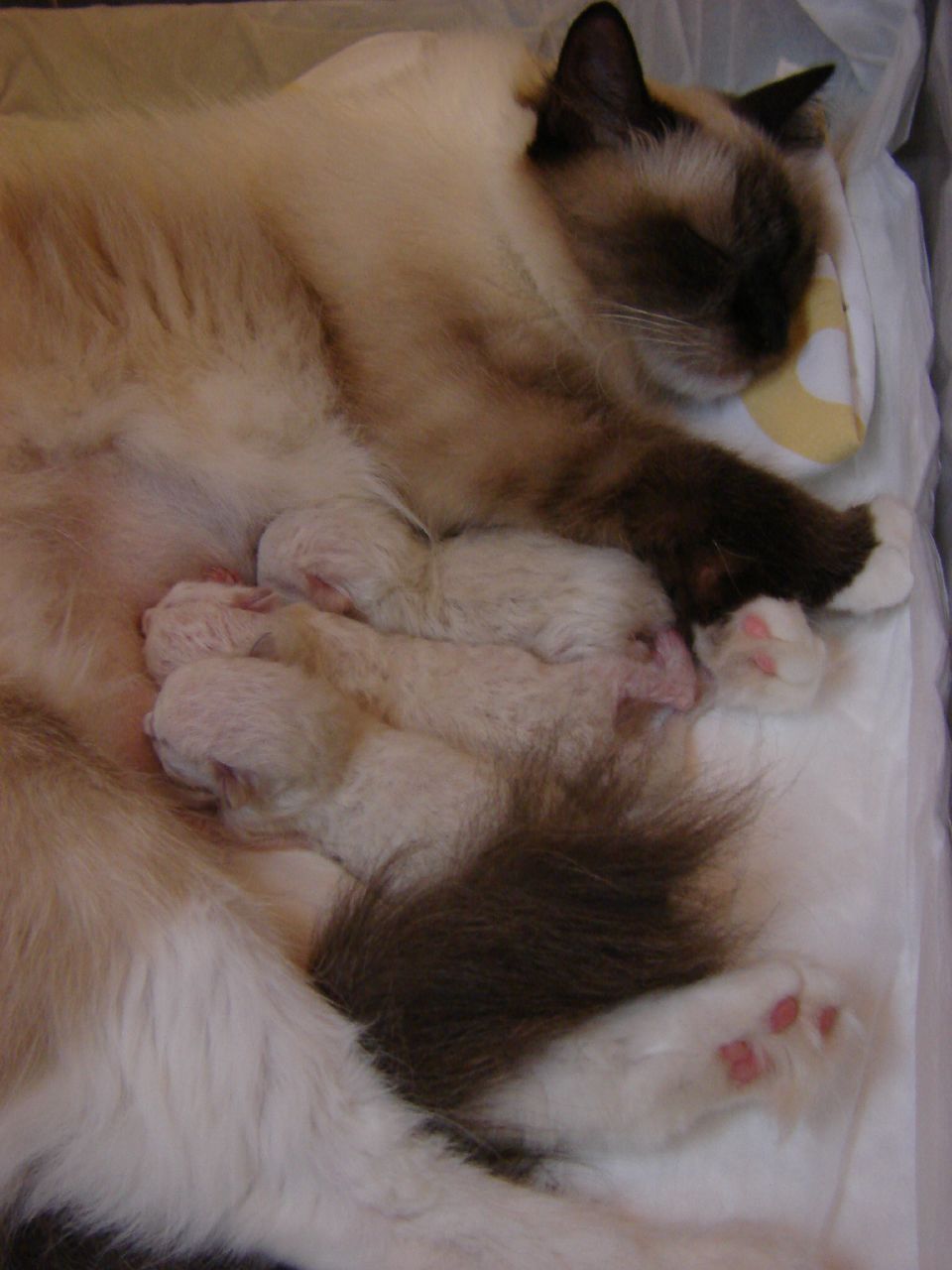
Baby cats are called kittens, their mother is a queen.  Read more about How Cats have Kittens.


photo source
This is a mother dog,  her babies are called puppies, the act of giving birth in dogs is called whelping.  Read more on Whelping


Happy Mothers Day!


Note:  Although baby animals are cute, you should not let your pet breed unless you have qualified people looking to take the off spring.  This is particularly true of cats and dogs, as in the United States over 4 million excess pets are produced every year, and are euthanized.  Keep in mind that not every female animal wants to be a mother, and some will not survive the pregnancy or giving birth.  Sometimes mother animals will not care for their young, and you have to be a foster parent.