Showing posts with label pictures. Show all posts

Saturday, March 14, 2015

The Most Beautiful and Strange Animals in the World

When I was a child my father was an ichthyologist; he studied fish.  We would visit aquariums often and loved poking around in tidal pools when we went near the ocean (which was not often as we lived in Alberta).  We got to know about many fascinating water creatures, not all of which were fish. 

Of all of the creatures in the water, some of the most beautiful, and mesmerizing, are nudibranchs.  Say "nude a branks".  They are mollusks that lose their shell when they mature.  They are sometimes incorrectly called sea slugs.  They are mostly found on the ocean floor, but are found all over the world, in the shallows, in the depths, in warm water, and in cold. 

Without shells to protect them nudibranchs may use their colors to blend in and match the surrounding corals, or to serve as a warning for potential predators.  Some are toxic, but not all are.  Their name means "naked gill".

Nudibranchs are carnivores, mostly consuming sponges (which are living animals), however some will eat other nudibranchs. 

"Glossodoris atromarginata" by Chika Watanabe from Los Altos, USA - Flickr. Licensed under CC BY 2.0 via Wikimedia Commons


Spanish Shawl nudibranch via Wikimedia Commons

Ceratosoma tenue from Lembeh Straits, Indonesia (and shrimp) via Wikimedia Commons

There are roughly 2,500 known species of nudibranchs, and probably hundreds more undiscovered ones.

Nudibranchs are typically slow moving creatures that just travel along the bottom, but when they move through the water they move with a delicate ribbon like motion that is beautiful to watch.


Friday, December 14, 2012

Share Your Pet Pictures on Your Own Custom Calendar

I remember several years ago my aunt surprised us with a calendar she had made using pictures of her cat, dog, and kids. It was very unique. She did it really well too using pictures she had taken throughout the year and matching them up with the appropriate month. 

I realize that it is a little late in the year, but I only got to thinking about this just now after finding Calendars.com.  They also have a huge assortment of dog breed specific calendars for all the dog lovers out there as well as a full range of pets and animal calendars.  Some of their wildlife calendars (such as the Hummingbird WWF 2013 Deluxe Wall Calendar) have a special bonus - in that part of your purchase price goes to WWF as a donation to help them help more wild animals!

You can make your own custom calendar at Calendars.com and if you are talented enough, and have time, you can stage a few pictures now to use throughout the calendar, such as having your pet sit with a red rose by its feet and a red background to use for February (Valentines Day). 

Their prices are great too, and if a personalized calendar is not for you they have a huge range of other calendars (as mentioned) books and puzzles with animal themes.

click here to go to the site

If you are looking for a unique gift or just something unique for yourself then for sure consider making your own custom calendar. I wish I had remembered to make this suggestion earlier, but there is still a little time before the New Year. A calendar is something pretty much everyone enjoys getting and when finished with the year they still have frameable pictures they can keep if they wish.

Like them on Facebook and get 10% off (a window should pop up after you have been on the site and picked out a calendar).

Sunday, July 22, 2012

Feeding Wildlife in Stanley Park, the Raccoons


We recently took a holiday to Vancouver, Canada. Our hotel was within walking distance of Stanley Park, a 1,000 acre park, surrounded nearly all the way by ocean. On our first night we walked to the Aquarium, and on the way we saw a family of raccoons, a mother and her two youngsters, raiding a garbage can.

The following day we walked around Stanley Park and sure enough we encountered more raccoons, including another mother with three youngsters and an adult who was missing a tail. There was a man feeding them what appeared to be fried chicken. A short time later a woman arrived to feed them grapes and cat food. Other people fed them cookies. 

To note, I am aware that grapes can be toxic to dogs, but not sure how they affect raccoons.

We spoke to many of the people who were feeding the raccoons and many said they made daily trips to feed the raccoons and other animals in the park. The people said that the park's people did not like them feeding the animals. They also told us that the parks people trapped and killed many animals every year.

Raccoons normally would eat fish (there are ponds in the park), crabs (from the ocean), insects, worms, as well as nuts, berries, and eggs.


We did not confirm if the parks people did trap and kill raccoons or not, but clearly there was a dilemma.
The parks people want the animals to be “wild” and to fend for themselves, feeding them can cause problems as their fear of people can turn them into pests. Normally raccoons are nocturnal but these were out in the day. 

If one bit a person there would be a rabies panic. The people felt terrible that the animals were being killed to control their populations, so were thinking that feeding them would mean animals would not be killed.  One persons said they thought the raccoons were being killed to stop them from eating the goose and duck eggs, but we also heard that duck and goose populations were being controlled too (supposedly people were shaking their eggs so they would not hatch).

Additionally a problem was occurring in that some people were feeding very unhealthy foods (cookies) to the animals. The people said they have gotten in trouble many times for feeding the animals but refused to stop.

I am not suggesting people do feed wild raccoons, however clearly some people are not going to stop doing so. It would be better if the people simply fed the animals a better diet, and did so later in the day so the animals could live more naturally.

Raccoons can eat cat food, ferret food, most vegetables (not onions, garlic, avocados), eggs, and fish. They should not have cookies, greasy foods, salty foods, and so forth.

Maybe the park's people could do the same as is done in some areas to control feral cats, they could trap the animals, spay or neuter some, and release them. Perhaps this is already being done and people are just not aware. Or the park's people could arrange for the raccoons to be relocated to wild areas, or to zoos.

As tourists we enjoyed seeing these animals, and hope they continue to inhabit areas of Stanley Park.

Click here to see more pictures of the Raccoons in Vancouver's Stanley Park.

Sunday, May 8, 2011

Happy Mothers Day, Pictures of Cute Baby Animals

Mother's Day is celebrated on different days all over the world, here in Canada, Mother's day is the first Sunday in May.  To celebrate this day I wanted so share with you some pictures of cute baby animals and their mothers.

photo source
A baby horse is called a foal, it is either a filly, if female, or colt, if male.  Learn more about Horses and Foaling


A baby llama is called a cria. Learn more about Llamas


photo source
Baby hamsters are called pups,  you can read more about Hamsters as Pets


photo source
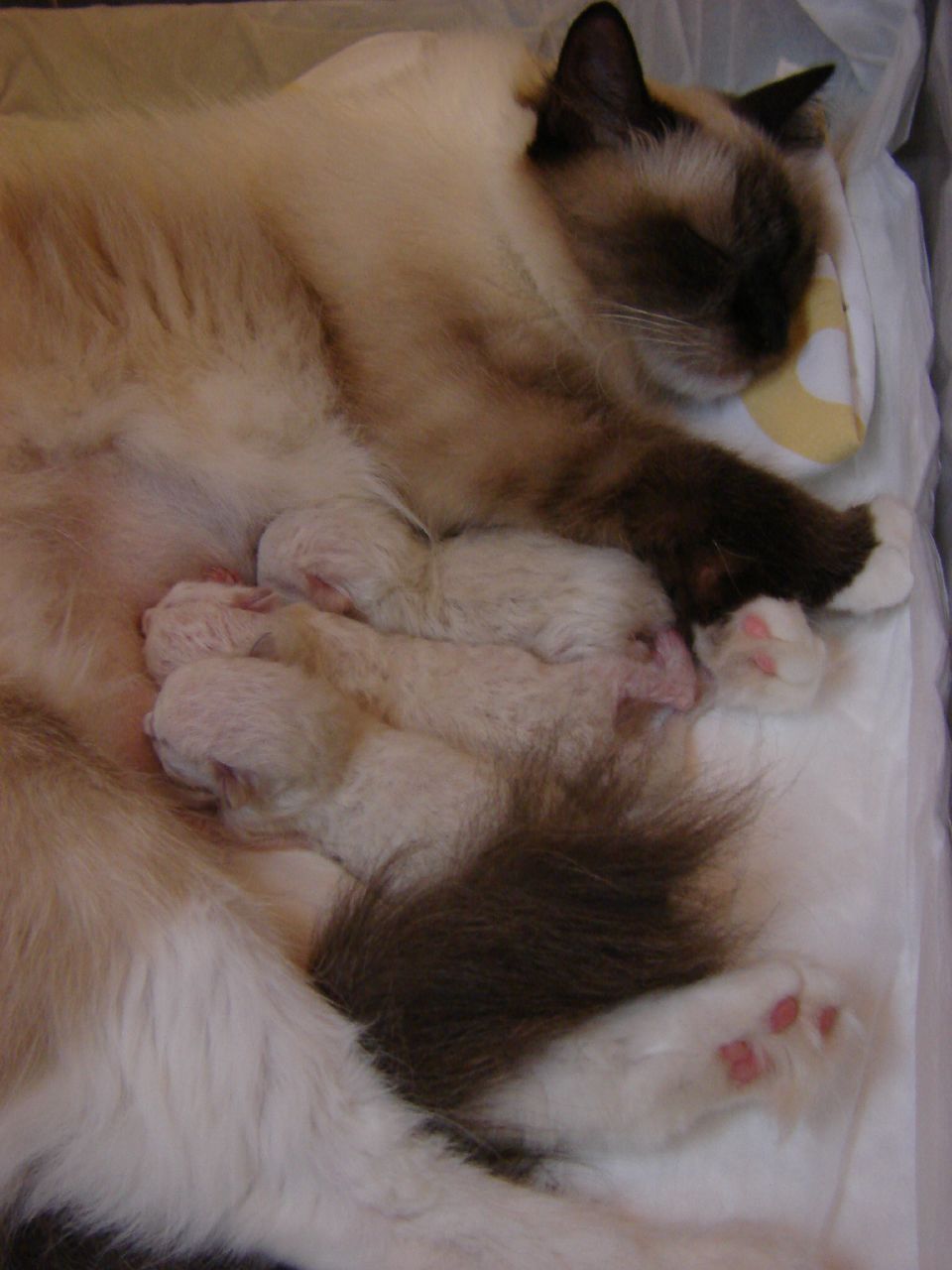
Baby cats are called kittens, their mother is a queen.  Read more about How Cats have Kittens.


photo source
This is a mother dog,  her babies are called puppies, the act of giving birth in dogs is called whelping.  Read more on Whelping


Happy Mothers Day!


Note:  Although baby animals are cute, you should not let your pet breed unless you have qualified people looking to take the off spring.  This is particularly true of cats and dogs, as in the United States over 4 million excess pets are produced every year, and are euthanized.  Keep in mind that not every female animal wants to be a mother, and some will not survive the pregnancy or giving birth.  Sometimes mother animals will not care for their young, and you have to be a foster parent.