Showing posts with label cute. Show all posts

Sunday, July 22, 2012

Feeding Wildlife in Stanley Park, the Raccoons


We recently took a holiday to Vancouver, Canada. Our hotel was within walking distance of Stanley Park, a 1,000 acre park, surrounded nearly all the way by ocean. On our first night we walked to the Aquarium, and on the way we saw a family of raccoons, a mother and her two youngsters, raiding a garbage can.

The following day we walked around Stanley Park and sure enough we encountered more raccoons, including another mother with three youngsters and an adult who was missing a tail. There was a man feeding them what appeared to be fried chicken. A short time later a woman arrived to feed them grapes and cat food. Other people fed them cookies. 

To note, I am aware that grapes can be toxic to dogs, but not sure how they affect raccoons.

We spoke to many of the people who were feeding the raccoons and many said they made daily trips to feed the raccoons and other animals in the park. The people said that the park's people did not like them feeding the animals. They also told us that the parks people trapped and killed many animals every year.

Raccoons normally would eat fish (there are ponds in the park), crabs (from the ocean), insects, worms, as well as nuts, berries, and eggs.


We did not confirm if the parks people did trap and kill raccoons or not, but clearly there was a dilemma.
The parks people want the animals to be “wild” and to fend for themselves, feeding them can cause problems as their fear of people can turn them into pests. Normally raccoons are nocturnal but these were out in the day. 

If one bit a person there would be a rabies panic. The people felt terrible that the animals were being killed to control their populations, so were thinking that feeding them would mean animals would not be killed.  One persons said they thought the raccoons were being killed to stop them from eating the goose and duck eggs, but we also heard that duck and goose populations were being controlled too (supposedly people were shaking their eggs so they would not hatch).

Additionally a problem was occurring in that some people were feeding very unhealthy foods (cookies) to the animals. The people said they have gotten in trouble many times for feeding the animals but refused to stop.

I am not suggesting people do feed wild raccoons, however clearly some people are not going to stop doing so. It would be better if the people simply fed the animals a better diet, and did so later in the day so the animals could live more naturally.

Raccoons can eat cat food, ferret food, most vegetables (not onions, garlic, avocados), eggs, and fish. They should not have cookies, greasy foods, salty foods, and so forth.

Maybe the park's people could do the same as is done in some areas to control feral cats, they could trap the animals, spay or neuter some, and release them. Perhaps this is already being done and people are just not aware. Or the park's people could arrange for the raccoons to be relocated to wild areas, or to zoos.

As tourists we enjoyed seeing these animals, and hope they continue to inhabit areas of Stanley Park.

Click here to see more pictures of the Raccoons in Vancouver's Stanley Park.

Sunday, December 4, 2011

Fainting Goats

Back in 1880 four goats were abandoned by a Canadian man in Tennessee, these goats soon had kids and somebody noticed a peculiar trait among their offspring.  It seemed when they got a sudden scare they fell over as if in a trance.  The condition was recognized as a rare condition that also occurs in humans, myotonia congentia.

When given a sudden scare the muscles in the legs of the goats freeze up, the animal quickly topples over as a result and may lay there frozen for 10 seconds or so.  For many years Myotonic goats were used as meat goats, intentionally scared so they would build up muscle in their leg from repeatedly freezing up.  Now they are more likely to be kept as pets or occasionally for cashmere fiber that some produce in the winter.


Myotonic goats are also called fainting goats and are smaller goats, often black and white, but they can be any color.   They are pretty easy to keep, needing shelter in cold and wet weather, and they are less likely to climb fences than other goats. 

If bred to another goat the fainting gene is recessive.  Younger fainting goats are more likely to fall over as the older ones learn how to brace themselves.  Of course any animal that falls down when frightened may be an easy target for predators, or thieves.  As such it is a good idea to keep your goats well fenced and secure.  


Read here if you wish to learn more about goats and goat care.

Thursday, May 19, 2011

The Tiger Mom and the Piglets

Sometime in 2006 an e-mail circulated about a female tiger nursing piglets to overcome her depression at the loss of her tiger cubs. 

I remember seeing this in 2007 and later did a search on it only to discover the whole thing was a fake.  The truth was a little depressing.

The tiger mom and the piglets were part of an entertainment feature at the Sriracha Zoo in Thailand.  This zoo is noted for having a tiger breeding program in which cubs are raised to be used in circuses or for sale to other zoos.  As such the cubs are probably taken from their mothers at a very young age and raised by people - or placed with a sow for equal entertainment value, at least for the hours people visit the zoo. 

The zoo went so far as to dress the piglets like tigers, but apparently this was also just for show, as the tiger skins were removed after the zoo closed.

one of the pictures from the circulated e-mail
To say if this is cruel or not is a person's own opinion.  It certainlly is not natural, although there have been some true stories where animals of one species raise young of an other (rarely a dog may raise a kitten, or young squirrels).  Nutritionally one would have to assume both the piglets and the tiger cubs were also fed special formula for their species.  In some cases visitors were allowed to bottle feed the young animals.  The Srirahca Tiger zoo would not be a place I would have on the top of my list to visit. 

It is interesting to note that there are currently more tigers in captivity than in the wild, yet many of the captive tigers are inbred to the point they have health issues, and short lifespans.

Further Reading On Pet Tigers and Zoos

Facts on Pet Tigers

So... You want a Pet Tiger... Other ways of having a Pet

Issues of Zoos

Wednesday, May 11, 2011

The Slow Loris is an Illegal Pet

The slow loris is a primate that has gained attention through a few YouTube videos.  As so often happens when "cute animal" videos come out, somebody insists they want to obtain that animal as a pet.  The slow loris, however, should not be kept as a pet. 

Slow loris are native to southeast Asia where it is illegal to capture them from the wild; owning them, and selling them, is also illegal.   Many slow loris are poached from the wild for the purpose of resale in bird and pet markets, or are shipped to other countries for sale in pet stores.  In these stores they are often listed as being "captive bred" however this is usually not the case, but nearly impossible to prove.  Even if they were captive bred, the parent animals were stolen illegally from the wild.

File:Myanmar Illicit Endangered Wildlife Market 06.jpg

photo source

The real cruelty is the fact that slow loris are put at risk by having their teeth pulled, or cut, before they become part of the exotic pet trade.  If rescued from markets they cannot be returned to the wild because without teeth survival is difficult.

The slow loris has a poisonous bite.  To deal with this the poachers will cut their teeth with pliers or nail clippers, or yank them out.  Veterinarians are not involved because aiding the poachers would be illegal.  The poor little animals are given no pain killers, and nothing to fight infection.  Many slow loris stop eating as a result of the pain, or die from infection.  There is no way of knowing just how many slow loris die, but estimates suggest that many get infections which are often fatal and others die of stress or malnutrition.

photo source

Make no mistake, the slow loris, although cute, should not be part of the exotic pet trade. If you happen to see a slow loris for sale in an illegal pet market, DO NOT buy it, this only rewards the seller.  Rather you are suggested to call police or other animal welfare authorities, who will take the animal and place it in a rescue.  This hurts the seller and hopefully they will stop their involvement in the cruel trade of this beautiful animal.

Please read more about the Slow Loris .

Sunday, May 8, 2011

Happy Mothers Day, Pictures of Cute Baby Animals

Mother's Day is celebrated on different days all over the world, here in Canada, Mother's day is the first Sunday in May.  To celebrate this day I wanted so share with you some pictures of cute baby animals and their mothers.

photo source
A baby horse is called a foal, it is either a filly, if female, or colt, if male.  Learn more about Horses and Foaling


A baby llama is called a cria. Learn more about Llamas


photo source
Baby hamsters are called pups,  you can read more about Hamsters as Pets


photo source
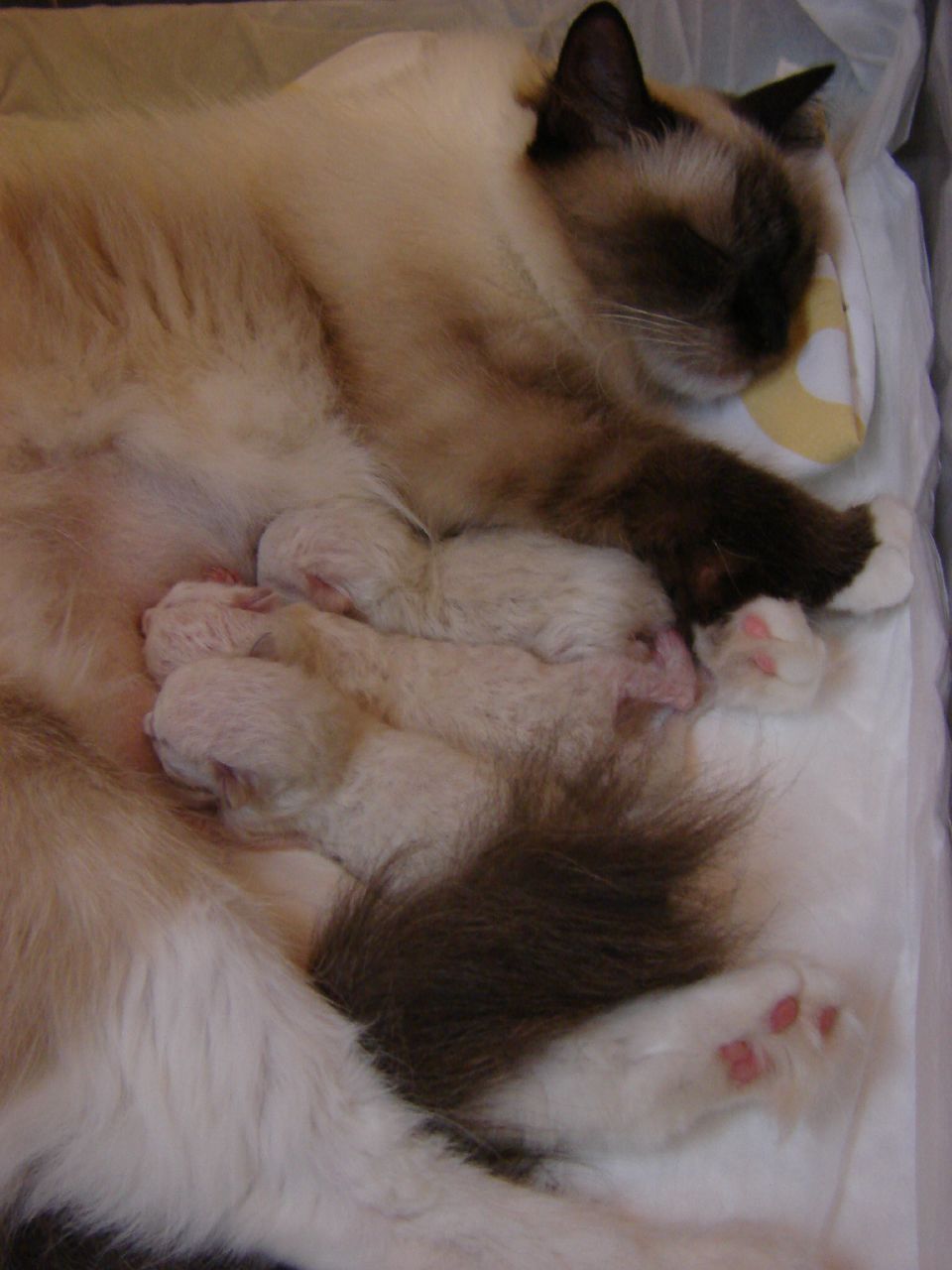
Baby cats are called kittens, their mother is a queen.  Read more about How Cats have Kittens.


photo source
This is a mother dog,  her babies are called puppies, the act of giving birth in dogs is called whelping.  Read more on Whelping


Happy Mothers Day!


Note:  Although baby animals are cute, you should not let your pet breed unless you have qualified people looking to take the off spring.  This is particularly true of cats and dogs, as in the United States over 4 million excess pets are produced every year, and are euthanized.  Keep in mind that not every female animal wants to be a mother, and some will not survive the pregnancy or giving birth.  Sometimes mother animals will not care for their young, and you have to be a foster parent.

Monday, April 4, 2011

Chicks are Not Appropriate Easter Gifts

Pets are, or should be, a lifetime commitment, sadly many people get chicks for their children at Easter time.  These chicks are brought home on a whim, an impluse, purchased because they were "cute" with no other thought. 

Chicks are living animals, just like kittens or pups.  Most Easter chicks are not prepared for, not cared for, and most die within days, or a few weeks, or the owner simply comes to the realization that they now have a baby chicken... and what do they do with it!?!

Most people who get Easter chicks do not keep them as pets, and do not provide proper care for them (for example they need heating lamps), even though they are living animals, purchased as pets.  Chicks are at risk for stress, and can be hurt if held too tight by a child.

To make matters worse some of these chicks have been dyed.  While this is sometimes done safely and humanely, it is sometimes done with toxic dyes, the sellers knowing that the chicks are probably not going to live anyhow.  As the chicks are often dyed while still in their eggs, mistakes can occur.


There is no reason to bring home a chick as an Easter gift.  Pets are not novelty items, toys for kids, they are lifetime commitments, this applies to chicks too!

Read More

Chicks and Bunnies are Not Easter Gifts

Keeping Pet Chickens

Which Breeds of Chickens are Best as Pets

How to Raise Baby Chicks

Saturday, December 18, 2010

Fluffy Pet Chickens, the Silkie Chicken

Silkie Chickens look more like bunnies than like chickens, but indeed they are birds.  Silkie Chickens (sometimes spelled Silky Chickens) are exotic chickens, as they have blue - black skin, flesh, and bones. Another unusual feature is that silkie chickens have an extra toe on their feet. 

Silkie Chickens are one of the most popular chicken breeds for pets.  They tend to be friendlier than most other chickens and often enjoy being carried around, particularly if handled from a young age.  One of the things that make them so popular as pets is the fact they are friendly, even the roosters are not usually as mean as the roosters of some other breeds. However it should be noted that they are gentle even among other chickens and as such tend to be bullied if in with other breeds. 

Silkie chicken hens are terrific mothers and are noted as being very broody hens - often used to hatch and/or raise chicks from other chickens, or even game birds.


photo source - House Chicken, Sweet Treats, having a day at the Park.

Silkie chickens are soft to the touch, and although their feathers look like fur, they should never be brushed.  Their feathers lack barbicels which lock feathers together neatly.  Although most chickens can fly a bit, silkies are considered completely flightless because their feathers are so poor.  Additionally the loose feathers mean they are less able to cope with cold weather. 
 
Silkie chicks can be purchased from Hatcheries, local farmers, exotic livestock auctions, and bird shows.  Some people enjoy buying "hatching eggs" which are eggs that need to be incubated in order to hatch.  Other people do not want the trouble and buy week old chicks.  Still others prefer to buy more mature birds.

At five months of age the hens start laying light brown eggs, and, like all hens, will lay eggs even without a rooster.  Laying does tend to decrease after two years, but a well cared for pet Silkie can live for more than 8 years.

Our silkie rooster and a chick.


Silkies are small chickens, even their standard size is small, but they also come in a bantam size as well.

When buying Silkie chicks, or chickens, always check to see that the vent area is clean when selecting any bird.  Never buy birds from a farm if you see other sick looking birds around.

Read about what happened to us when one of our hens hatched 9 chicks and one hatched late!


Tuesday, November 30, 2010

Sugar Gliders as Exotic Pets

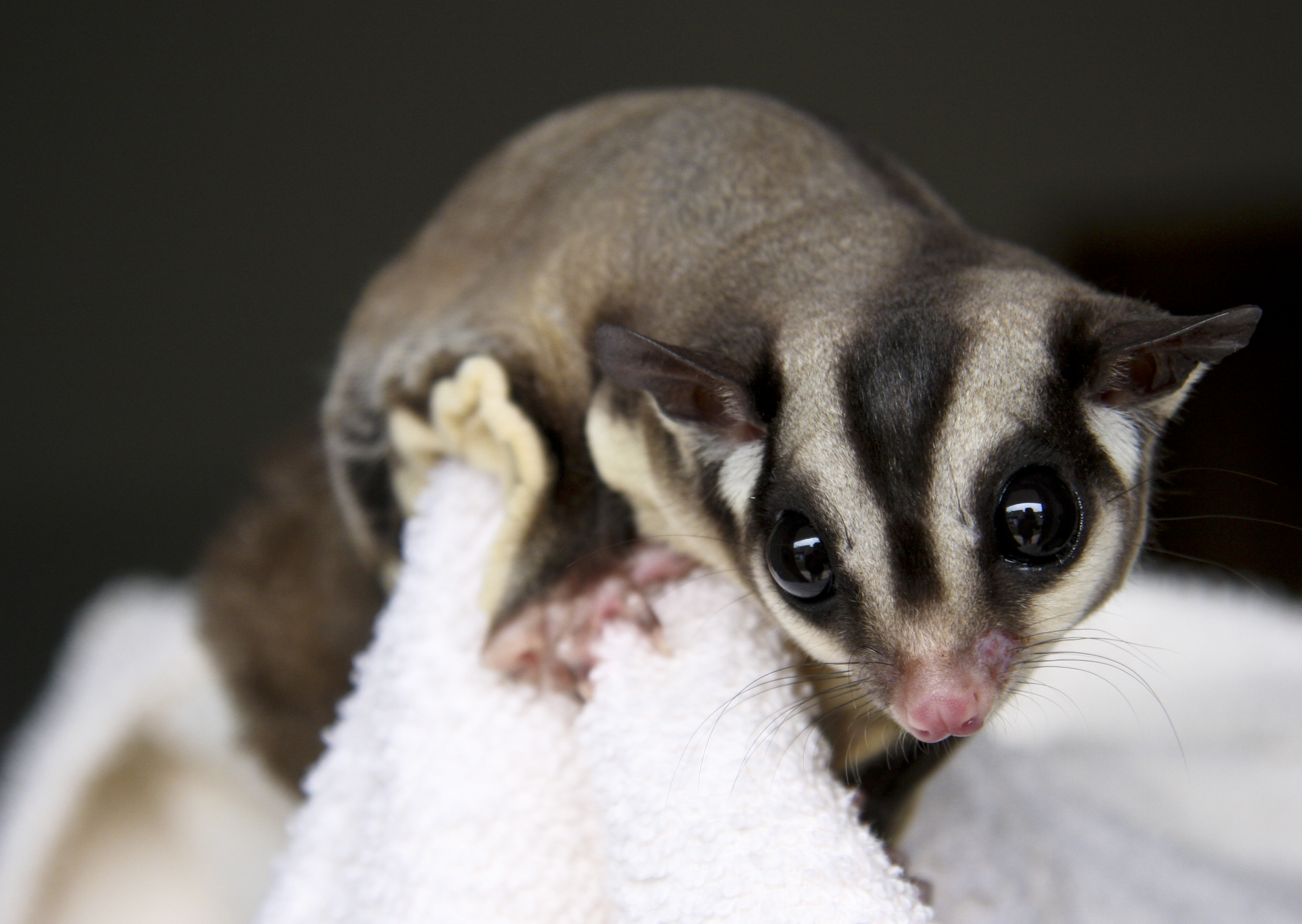
Sugar Gliders are a trendy exotic pet from Australia. It is important to know more about Sugar Gliders as pets if you are thinking of getting one. 

These marsupials are certainly cute, but not a pet we, at the cabin, have ever owned.  Having spoken to many Sugar Glider owners, they are a very demanding exotic pet, and one that some people have felt was a mistake to get.  Sugar Gliders are certainly not pets for the first time owner, or a person who does not have a lot of time to spend with their pet. 


Sadly, sugar gliders are often kept in cages that are far too small for a their needs; they also suffer if not kept with a companion, or not carried around for a good portion of the day (at which time they pee, and poop). 

Another concern is the age at which Sugar Gliders are sold and purchased.  Pet stores often sell retired breeding animals, in other words - old stock, with breeders selling younger animals directly to the public for higher prices than the stores are willing to pay them (indeed stores buy cheap so they can resell high).  It is very difficult to tell the age of a Sugar Glider so this is a common trick in the industry.

File:Petaurus breviceps Petauro dello zucchero.jpg
By Alessandro Di Grazia (http://www.petsugargliders.eu/) [GFDL (www.gnu.org/copyleft/fdl.html) or CC-BY-SA-3.0-2.5-2.0-1.0 (www.creativecommons.org/licenses/by-sa/3.0)], via Wikimedia Commons


How To Care For A Sugar Glider


Feeding 
 
Like most exotic pets, Sugar Gliders do have specific dietary requirements. They are very prone to problems with getting an improper balance of calcium to phosphorous, which will contribute to a bone disease. There for it is highly recommended you find a proper food made for Sugar Gliders. Or supplement their diet with vitamins and minerals. In an emergency you can give them good quality cat food, fresh fruit, as well as calcium enriched crickets or chicken eggs.


Housing and Care

Height of the Sugar Glider cage is very important. They are one of the few pets who actually prefer a taller cage to a long one. The cage should be at least 3 feet high for a pair of gliders, and taller if you are planning on housing more. The bars should not be more than ½ an inch apart or you will risk escape. You may house two same sexed animals in a cage, which may be better than having a breeding pair. If the cage is large enough you may have as many as four adult animals in a cage.

As they love to climb, you must provide plenty of opportunity to climb, ladders, ropes, and even bird toys are good if you cannot find actual toys for sugar gliders. They do require a place to sleep, which should be either a nest box or pouch. Because they tend to urinate in their bed you may want to get 2 pouches, so you can wash one and use the other. They may enjoy a wheel similar to what is used for hamsters.
You will want to line the bottom of the cage with newspaper and cover it lightly with pine (not cedar) shavings. Of course you need to supply a water source.


Other Information

As mentioned, these are NOT pets for beginners. They require a lot of social care. If you are only going to have one you must be able to provide it with a lot of social interaction, such as carrying it in a pouch for most of the day and evening. Remembering that Gliders are not “neat” pets. They will urinate in the pouch. Punishing them for a natural behavior is not fair. You cannot house train these small, rather primitive animals. Likewise, because they are climbers, and have sharp claws they should not be punished for scratching you when they climb on you

They are nocturnal, which means they will keep you awake at night if you plan to keep it in your bedroom. They will live for 10-15 years, about as long as a dog, are you prepared for this length of a commitment? Another question to ask is do you have a knowledgeable veterinarian in your area, who can provide care? If you are a person who likes to take vacations, you need to be prepared to provide social care for your Sugar Glider while you are away. 
 
These are not cheap pets and they have very special requirements. Getting a pet should never be taken lightly, and this is especially true of exotics like Sugar Gliders. I encourage you to do more research on your own before getting a Sugar Glider (or any pet). Use multiple sources and especially those from people with nothing to gain. Somebody who is trying to sell you a pet has their income on the line. They may not be totally honest about the work or expense involved.

An alternative pet would be a Rabbit or Guinea Pig. Both are awake in the day, and so much is known about them that it is easier to find good care for a sick animal. Neither are as demanding as Sugar Gliders, and both come in some rarer forms. Good luck with your selection of the right pet.

Wednesday, November 17, 2010

Cutest Bunnies in the World

At the Animal Cabin we like all kinds of animals, from tiny bugs, to massive creatures, but of course we also love looking at some cute critters, and what could be cuter than a bunny?

Writer RJ Evans is noted for his original sense of humor, and ability to find the most awesome pictures!
He must be a Star Trek fan too because in this link he references one of Star Treks most famous animals - the Tribble.

The Angora rabbit is Earth's version of the Tribble, and nearly breeds as fast!

photo source
If you think this Angora bunny is cute you will want to check  RJ's article The Real Life Tribble - click here.

Angora rabbits are not easy pets to care for, they require regular grooming or their hair can become a real problem for them.  If hair around their rump is allowed to become dirty it can attract flies which can lead to a deadly problem - fly strike.

Discount Pet Supplies at ThatPetPlace.com

Read more about angora rabbit breeds.
See other cute rabbit breeds.

Sunday, November 7, 2010

The Shaggy Donkey of France

One of the rarest donkeys is the shaggy Poitou Donkey of France.

Here at the cabin we enjoy sharing information about such unusual animals, ones that many people will never see in their lifetime, but hopefully whose species can be saved.

In France these shaggy donkeys are called Baudet du Poitou. These donkeys are so rare there are less than 300 purebreds even today.


The Baudet de Poitou is a fairly large donkey, standing 13 to 15 hands high (a hand is 4 inches or 10 cm). The most recognizable feature is their long hair, known as “cadenette” which hangs down like dreadlocks. In color they are always dark brown or black, but with a white tummy and nose.  The Baudet de Poitou donkey has lighter hairs around the eyes. They lack the dark dorsal stripe seen in most other breeds. Their long hair is a dominant trait and crossbred animals will have this feature as well.  

Because the long hair is dominant it means that part bred animals will have the long hair so unscrupulous sellers might try to suggest their part-bred Poitou is in fact a purebred, always get proof of parentage with registration papers.  Like most animals these hairy donkeys cannot legally be called purebreds unless they have registration papers proving the same.   

Get 5% off SLT.com

5% off Any Size order on Horse.com

Read more about these shaggy donkeys - click here.
To read about the differences between horses, mules, and donkeys - click here.
To read a true story about my standard donkey - click here.