Showing posts with label kittens. Show all posts

Sunday, July 15, 2012

Facts about Domestic Cats


Cats are common house pets, having been domesticated over 9,000 years ago. In most modern cities the domestic cat is a common sight and they are often considered members of the family. In other areas cats are seen as helpful farm animals, killing mice and rats who would eat and contaminate food. Feral cats can be tamed though kindness, and food.

One of the reasons cats are so common, is there fast breeding rate.  Cats come into heat frequently, they are pregnant for about 57-65 days and can have 6 (or more) kittens per litter.  Unlike dogs, cats usually have no problems delivering their kittens and rarely require caesarian sections.  The biggest exception being cat breeds (such as the Persian) which have large round heads.


Kittens can be weaned at 6 weeks, but it is better to wean kittens at 8 weeks.  Homes should be kitten proofed before getting a new kitten.  There are many common household dangers to cats owners should be aware of.

You should have your kitten checked by a vet before bringing it home, it should be vaccinated and wormed too.  Note that it is not uncommon for cats to have heart murmurs - not all are severe.

Kittens usually know how to use their litter box with no problems, however kittens from a farm might not have used a litter box before so some additional training may be needed.  Kittens should not be allowed outside until they are older (or should be kept indoors always). 


When it comes to selecting a new cat, most people want kittens, and sadly few adult cats, and even fewer senior cats, find homes.  There are some concerns with adopting an older cat, but there are also many reasons why people may want to adopt a senior cat.

Many people worry if their cat can make them sick.  In general the answer is "no" but kittens can spread cat scratch disease.  Toxoplasmosis is a parasite that cats can catch from mice and this is a concern mostly to pregnant women.

Another concern among cat owners is that cats enjoy being awake at night, so it is a good idea to try to train them to sleep when you sleep.

Cats sometimes do not drink enough water and as such are sometimes prone to having urinary tract problems.  It is important that owners find ways to encourage their cat to drink more water to keep its urinary tract system healthy.  Pay attention to the magnesium content in dry food, select a food with a low magnesium content.  If your cat is not getting enough to drink it can get a urinary tract infection - a clue that your cat may have an infection is if it starts peeing around the home, not in the litter box.

Cats are obligate carnivores, they need meat.  People often debate about how to feed cats correctly.  Many agree they should have good quality dry food available at all times and be given small helpings of canned food as per their age and health needs.  Although many people think of tuna as being a favorite, it is a food cats should not have.

Cats can suffer from diabetes, as such, unless you want to be giving your cat insulin injections daily, it is important to keep your cat's weight under control.  Cats have many risks related to being obese.  It is a myth that spaying or neutering causes a cat to be lazy.  In general this is related to a lack of stimulation by owners who sometimes expect cats to exercise themselves. 

Be aware that many human medications are toxic to cats.

Cats sometimes vomit; in some cases this is related to hairballs (see below) in other cases this is related to food or health problems.

Cats generally prefer to live alone, not with other cats, however if selected correctly, and introduced correctly, cats can get along.  Cats can even get along with dogs too, but certain dog breeds are better with cats than others
.

Other Tips for Cat Owners


Not all cats like catnip; kittens rarely notice it, but you can try it for your cat after it is 6 months of age.

Hairballs are not "normal" but are common, try brushing your cat more to remove loose hair, feed a better quality cat food, and reduce stress to reduce shedding.

Polydactyl cats are cats with extra toes, and are considered to be lucky.

While most cats look somewhat similar there are a few unusual breeds, such as the Manx and Siamese cats.

Most cats you see are not specific breeds, in order for a cat to be called a Purebred, it must be registered.

Adopting a cat from an animal shelter is often cheaper than taking a "free kitten" to the vet for a check up, vaccination, and worming.  Animal shelters often have health guarantees and may give out many coupons and deals.

Sunday, May 8, 2011

Happy Mothers Day, Pictures of Cute Baby Animals

Mother's Day is celebrated on different days all over the world, here in Canada, Mother's day is the first Sunday in May.  To celebrate this day I wanted so share with you some pictures of cute baby animals and their mothers.

photo source
A baby horse is called a foal, it is either a filly, if female, or colt, if male.  Learn more about Horses and Foaling


A baby llama is called a cria. Learn more about Llamas


photo source
Baby hamsters are called pups,  you can read more about Hamsters as Pets


photo source
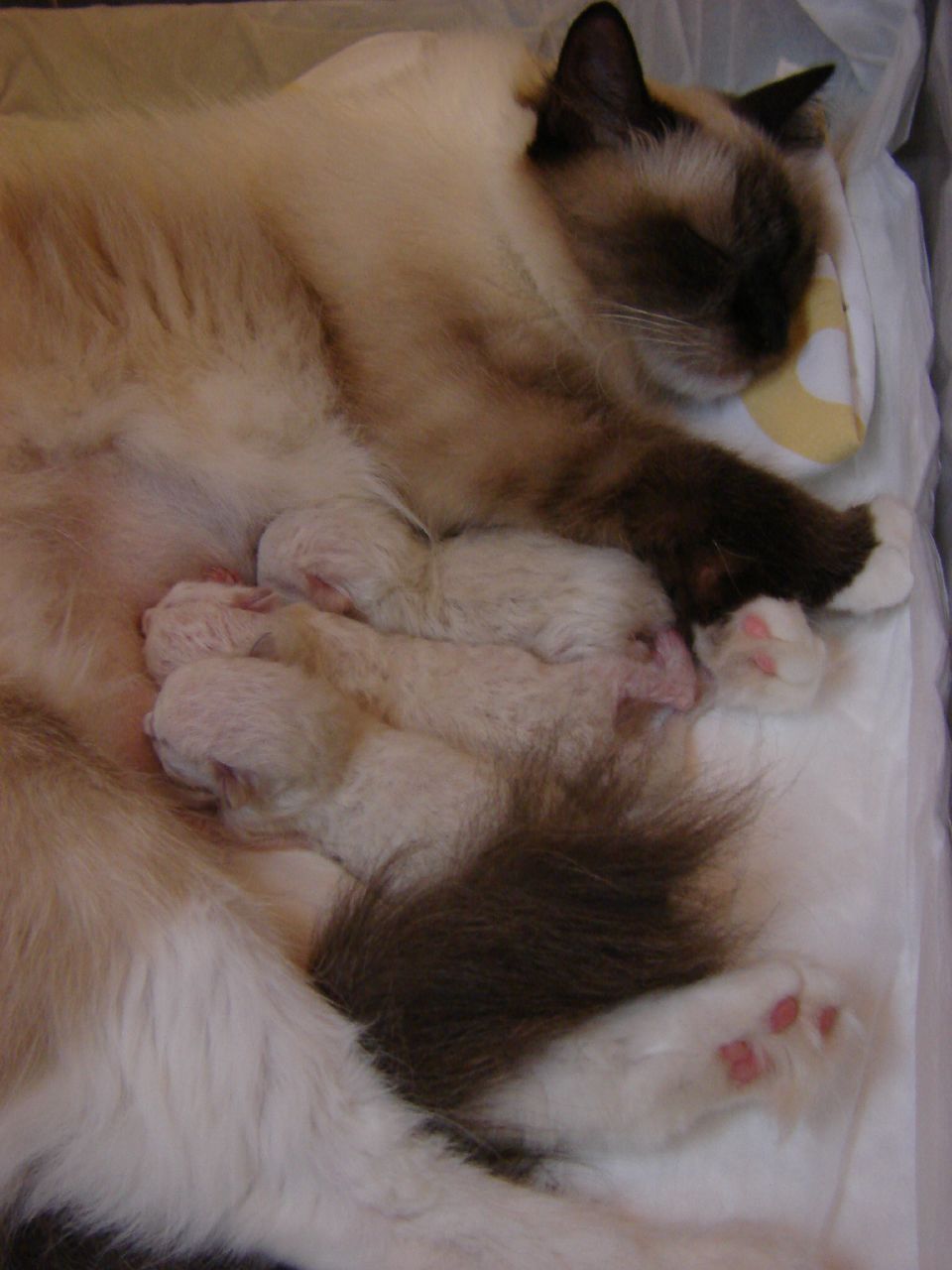
Baby cats are called kittens, their mother is a queen.  Read more about How Cats have Kittens.


photo source
This is a mother dog,  her babies are called puppies, the act of giving birth in dogs is called whelping.  Read more on Whelping


Happy Mothers Day!


Note:  Although baby animals are cute, you should not let your pet breed unless you have qualified people looking to take the off spring.  This is particularly true of cats and dogs, as in the United States over 4 million excess pets are produced every year, and are euthanized.  Keep in mind that not every female animal wants to be a mother, and some will not survive the pregnancy or giving birth.  Sometimes mother animals will not care for their young, and you have to be a foster parent.

Tuesday, November 2, 2010

Can Wild Cats be Tamed

A "Domestic" house cat that was born owner-less and lived wild from the start is not really a "wild" cat, it is correctly known as a feral cat; with the term "wild" referring real wild cats, lions, tigers, and so forth.  This article is about taming feral cats that have been living as wild all their life, not about taming tigers, lions, bobcats, and others.

At one time I was told it is impossible to "tame" any feral cat unless you caught them before they were 8 weeks old, but this is not true!

I live in the country, on 10 acres, with no neighbors in sight.  An old house sits as it waits to fall in on itself, and from time to time a feral cat had litters in the house.  Although we tried to trap her we were never able to but we currently have four of her kittens (from 2 or 3 different litters) in our care, only one of which was caught as a wee kitten. 

We know these kittens had been living wild their whole lives, and yet now all are tame, and you would not know they had been without human contact for much of their early lives.  The latest was well over a year old before we managed to catch him.


This snobby looking fellow was at least a year old when we caught him, yet is quite tame now. 

As a result of our own experience, we at the Cabin, would like to share with everyone that even adult cats born totally wild can be tamed.  One has to be willing to work at it.  Typically once they know that it is warm indoors, and you have food, they will change their way of thinking.  

* Be sure to spay or neuter as soon as possible!

How to Tame Young Kittens


To tame young kittens we would keep them in a small cage, as for guinea pigs, but a dog kennel would work too, or even a very small bathroom (keep the toilet lid shut).  The kittens need dry food, water, and a small litter box.  The idea of the small cage makes them easier to catch.

As many times a day as possible (at least 3 times) you should go in and hold each kitten.  They will hiss and freak out so you must be unafraid.  If you are worried about the kitten getting away from you, do this in a room with the door shut at first.  Hold the kitten for at least 15 minutes at a time.  Eventually there will be a time when the kitten will relax and even start to purr.
Cage with 3 kittens.


When you put the kittens back in their cage then offer them some canned food on a plate.  This way they associate people with good things.  Eventually the kittens will be less afraid, and will even start to climb up the cage to get attention/food.  The overall taming process can take 1 week or more depending on how old and how feral the kittens are.  


Read more about What to feed a new kitten, click here.


Real wild cats are a different matter....

Lions, Tigers, and so forth are not easy to tame when caught in the wild even if caught as young kittens, and can never be fully trusted.  Even those raised in captivity from captive parents are not as tame as domestic cats.

These animals can never be trusted to the same level in part because of their size and in part because they still have such strong "wild" instincts.