Wednesday, March 30, 2011

Ferrets as Exotic Pets

Ferrets are a different kind of pet, playful like a cat, but clever like a Jack Russell Terrier, these are not a pet for a first time pet owner.

Ferrets are small carnivorous mammals, they are not rodents, but rather are weasels and would happily eat most rodents if they should encounter them, in fact they are often used for hunting rabbits.  They will also feast on bird eggs, and as such are illegal as pets in many areas due to the risk of them escaping (or being turned loose) and endangering local wildlife species. 

Ferrets are awake in the morning and evening hours and are quite active when awake.  They should have large, interesting, cages, and be given at least 4 hours out of their cage every day.  They are very curious, playful, pets.

One of the biggest concerns with keeping pet ferrets is their smell.  Ferrets have a scent gland near their anus and can release their anal glands at will (usually when scared).  For this reason many people in the USA and Canada have them descented, in fact this is often done to young ferrets before they arrive in pet stores for sale.  Other countries consider this inhumane, for example descenting is not generally done to ferrets in the UK.


Ferrets are obligate (true) carnivores, they need a proper meat source in their diet.  Cats are also obligate carnivores, and good quality cat food can be fed to a ferret in an emergency, however proper ferret food is always preferred, and in either case a meat source must be the first ingredient (eg.  Chicken Meal, Turkey Meal, Lamb Meal).

It is always best to buy a pet ferret from a breeder, or adopt from a shelter rather than buying from a pet store as the pet store ferrets typically come from mass breeders - are generally less social, and may have genetic concerns as the result of being poorly bred.

Take 5% OFF ANY SIZE ORDER at Ferret.com. Use coupon code CJFE5OFF at checkout.

Read More Information About Pet Ferrets:

Fast Ferret Facts

Unusual Pets:  Ferrets

Friday, March 25, 2011

Teacup and Miniature Pets

Many people think it is cute to have a miniature pet, these are also known as “teacup” pets. Sadly this trend is generally considered cruel, the pets are stunted through poor nutrition, poor genetics, and generally have shorter lifespans riddled with health problems.


Many people who own “teacup” pets become defensive, insisting that their pet is in the best of health. In truth they do not know what is going on with their pet internally (liver and heart problems are common) and many health problems related to being stunted do not show up until later in life – and most owners simply attribute these problems to old age, rather than poor breeding or a lack of proper nutrition in the animals growing stages.

As mentioned teacup pets are intentionally stunted in many ways, breeding genetically small animals, to genetically small animals, is one of these ways, as well many unscrupulous breeders cheat on feeding, giving the growing animals less food than they should have, and often wean the animals early to sell them extra young.

Buyers should be aware that buying extremely stunted animals supports these cruel practices, and may leave them with a pet that has huge veterinarian bills later in life.

“Teacup” dogs are probably the best example of this breeding practice, but it does occur in the exotic pet industry too, most often with pigs. Many people are fooled, unaware that pigs grow slowly, and their stunted animal will still get quite large.


photo source - These miniature horses are at a show, they are not as small as some breeders are striving for - and are being shown to prove they are healthy and worthy of being bred.  The extremely stunted miniature animals would never be able to win a ribbon in a conformation class (most have leg deformities).

Miniature horses have been so grossly stunted that many die when foaling (giving birth) and many cannot give birth without human help.


photo source - In contrast to the miniature horses further above, we see Thumbelina - and by looking at her you can see the deformities in her joints, and head.  Thankfully her owners are not planning on breeding her. She is actually a dwarf as opposed to being a miniature.

In general it is advisable to stay away from anyone marketing or selling “teacup” pets of any variety. If you want a small pet – get a hamster! 

Further Reading

Creatures Great and Small - breeding to extremes - a list of health problems

Tuesday, March 15, 2011

How to Find Adoptable Exotic Pets

Pet Stores are the worst places to get a pet!  Why?  Because stores by 95% of their pets from mass breeders - mills -that breed pets for no other reason than profit.  They breed cheap to make the most money.  In most cases the pets have never even been handled prior to the day they are taken to the store and as such tend to be unfriendly.


As such buying from a reputable breeder is one of the best ways go get an exotic pet, but they can be hard to find and may be pricey, so the best option is to adopt an exotic pet from an SPCA, humane society, or other pet rescue group.

Adopt a Pet and Save a Life
A vast array of adoptable exotics can be found at most animal shelters, (although the small and furry ones are most common) it is just a matter of being in the right place at the right time, because many exotic pets are adopted within days of going up for adoption.  Others sadly wait for weeks, or months, before finding a loving owner.

Petfinder.com has a listing of many adoptable exotic pets, from snakes to skinny pigs (hairless guinea pigs).  We decided to look for adoptable exotic pets in our area of Alberta, and found many rabbits and guinea pigs, including Sherona who is up for adoption in Red Deer, Alberta.

You can see Sherona's Page here.

Adoption is a great way to "Save a Life", as well you often save money, and the adoptable pets sometimes even come with their cage and supplies.

Further Reading

The Advantages of Adopting a Pet rather than Buying One

How to Adopt a Pet from an Animal Shelter

Guinea Pigs as Pets

Monday, March 14, 2011

Tips for Keeping Pet Chickens

While most people keep chickens to raise for meat, or eggs, some people enjoy keeping chickens as pets.  When keeping pet chickens it is usually hens who are kept, as roosters tend to be loud, and can be mean,  however some people will keep hens and roosters together for the purpose of raising chicks.  In this case the birds are often of the bantam (smaller) variety, which are typically fancy or ornamental breeds.

 Hens start laying eggs around five months of age and do not even need a rooster in order to produce eggs (although they will not hatch).  As she gets older she will lay fewer eggs each year, and many hens stop laying in the winter.

Certain breeds of chickens are friendlier than others, so breed selection when you want a pet is key.  Note that it might seem nice to rescue former battery hens (those used for massive egg production) however these hens have limited human contact and were not bred to be "pets" and as such wont be as relaxed or friendly.

The friendliest chickens tend to be those of quieter breeds that were raised in incubators where they may have been regularly handled.  Chickens are easily befriended by offering them chicken scratch only when you are with them - of course they need proper laying ration at other times - and do best when allowed to free range in the day.  The do need protection at night - in the form of a chicken coop, with roosting areas, and a laying box.

©by Brenda Nelson

For keeping chickens as pets I strongly suggest getting 3 or 4 hens, or if you are getting a rooster and want to raise chicks you may want 1 rooster and two hens.  

Be sure to check the laws in your area to make sure chickens are allowed as pets.

One of my favorite breeds of chicken for pets and for chicks, is the Silkie.  For a friendly hen with good egg production consider a ISA Brown or Red Sussex.  Look for Easter Eggers if you want a mix of colored eggs (even blue).

Cute Pets:  The Silkie Chicken


Friday, March 4, 2011

Adopt the Internet Day

Petfinder.com is using March 15, 2011 as Adopt the Internet Day, a day they plan to "take over" the Internet in an awareness campaign about pet adoption and issues facing homeless pets. 

Petfinder.com is a place where prospective pet adopters can go to find shelters with certain animals for adoption.  They list adoptable cats, dogs, horses, birds, rabbits, reptiles, and even farm animals.  Thus they may even have the exotic pet you are looking for!


On March 15 Petfinder.com is encouraging people to change their Facebook profile picture to one of an adoptable pet.  They ask people to tweet about an adoptable pet, specifically using the hashtag #adopttheinternt.

Until March 15, 2011, pet lovers can visit ICanHasCheeseburger and create a caption for an adoptable pet.

Please support Adopt the Internet Day, and make plans visit Petfinder.com's Special Page, on March 15.  Be sure to tell people about pet adoption on March 15 and encourage them to use Petfinder to locate a shelter near them.

Read How to Adopt a Pet from an Animal Shelter
Read Petfinder Making News

Sunday, February 27, 2011

Dendrobates, Pets that can Kill, Maybe

Dendtrobates, better known as Poison Dart Frogs, or Poison Arrow Frogs, are available in the pet trade for people wish to have a small, but colorful, exotic pet. 

Discount Reptile Supplies at www.thatpetplace.comPoison Dart Frogs get their name from the fact that their skin secretes a poison, in some species this poison is enough to kill a human.   People in Central, and South America, where the frogs are from, have used the poison from certain frogs on their darts when hunting to kill game animals. In fact of over 170 different species, only 4 have been commonly used for this purpose, and many are as toxic as others.

In the pet trade it is generally believed that the frogs are less toxic, or not toxic at all, due to the fact their diet is not the same as that of wild frogs.  In the wild the poison dart frogs would be eating poisonous insects; ants, centipedes, and so forth, and their poison most likely comes through those sources.  It is still suggested to wear gloves when handling poison dart frogs because they can absorb chemicals from our skin that could harm them. 

Most keepers do not handle their pets, instead they set up their enclosure and simply enjoy viewing their small pets.


Poison dart frogs are generally not sold in regular pet stores, an interested buyer should seek out a breeder through reptile magazines, or at exotic pet shows. Captive bred animals should be purchased in favor of wild caught animals (which might be illegal).

Poison dart frogs require moist vivariums set up with lighting and heat according to the need of their species. 

See more pictures of Dendrobate Frogs
Read more on the care of Poison Dart Frogs
Read to see how Diet Impacts Frogs and Flamingos

Wednesday, February 23, 2011

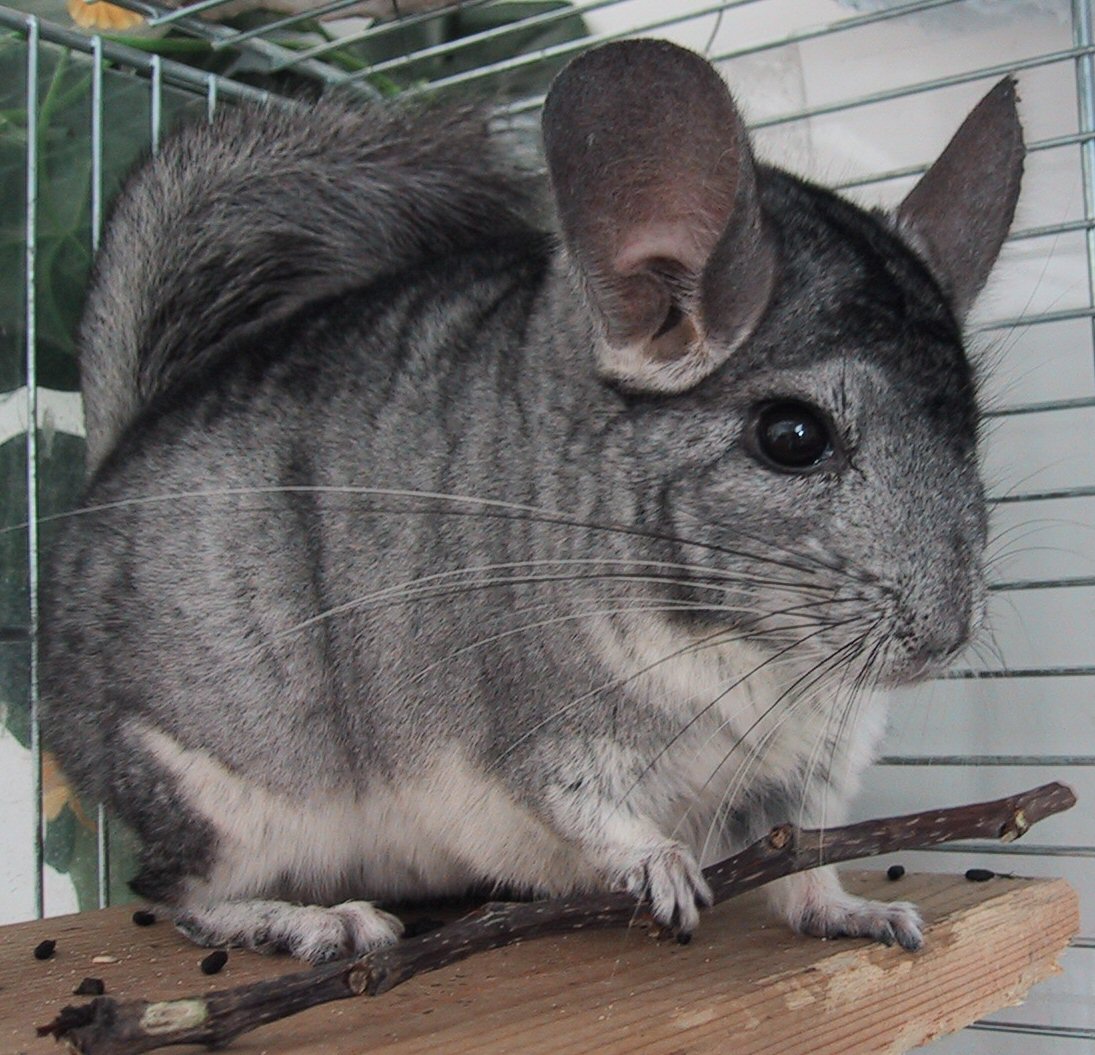
Pet Chinchillas

Here at the Cabin, I must admit I know very little about pet Chinchillas.  When I was very young some people in the house we lived in kept them, but I believe they were being raised for fur, rather than as pets. 

Today many people keep Chinchillas as pets.  They are about the size of a rabbit, however they do have different care needs.  For starters Chinchillas must have dusts baths, and are more active at night than rabbits are.  Where a rabbit can be often handled during the day, a Chinchilla is best left resting, handled in the morning, or evening instead.

File:Chinchilla-Patchouli.jpg
photo source

Chinchillas are not beginners pets, and do require special care.  The lifespan of a Chinchilla can be 12 years or more, so they are a pet that should be well thought out.

Here is a link to determine if a Chinchilla is a good pet for you.

Here is a link on how to select and purchase a pet Chinchilla.

As with all pets, a Chinchilla should be purchased from a breeder, or adopted from an animal shelter, they should not be purchased from pet stores.  Pet stores get their chinchillas from mass breeders - the animals are not use to being handled, inbred, and will be over priced for their quality, and the parent animals may be housed in horrid conditions - which your purchase would continue to support.